

Field Notes: Cinematic Encounters
Or How My Letterboxd Top 4 Gave Me a Temporary Identity Crisis

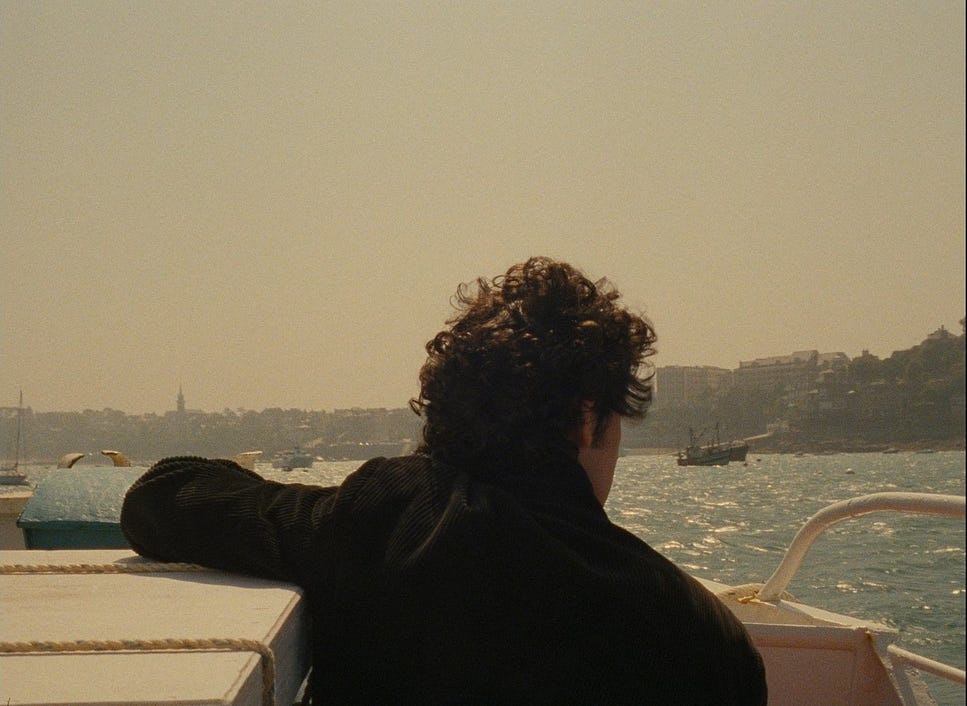
Dear Reader,
I want to tell you everything. All the time. I want to say look at this photograph that has just changed me life. What are some of yours? I want to hand you the other ear bud and say listen to this song and the way it sinks into your entire body. Have you experienced that before? I want to physically lift up your chin and say I promise you, it gets better.
Which is why I find writing on this platform simultaneously thrilling and not enough because I feel I have to tell you everything for this one thing to truly resonate. But I know ya’ll got things to do.
So I’m working on creating a space for those of you who want to engage more deeply with cinema as an artform and have the bigger issues of Luz Films Mag reside there for people to read. On Substack I’ll just give you some highlights. If you’re interested in being a part of this group that will live on DFOS - which has some really exciting features being rolled out right now that makes the internet feel a little more intentional and less noisy - please feel free to message me!
Alright let’s talk about cinema.
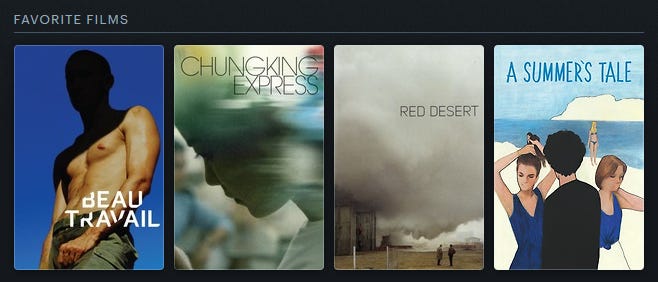
The past couple of days I’ve been staring at my Letterboxd Top Four which I recently changed and asking myself, what does this say about me? Are these really my “Top 4” films? What does that even mean? Can they even really be my Top 4 if Ryusuke Hamaguchi or Bi Gan aren’t on it? And if everything is some sort of signal to others, what am I signaling with these? But most importantly, I’ve been asking,
what am I trying to tell myself about myself with these choices?
You know what’s interesting? Identifying and knowing you’re a filmmaker without having made any feature films. Shorts, yes. A web series, check. A visual essay where someone’s first comment was “this is weird,” check check.
But I haven’t made my first feature and because cinema by nature is a show don’t tell kind of medium, it’s hard to articulate my vision and voice without an actual project to back it up.
I do think my upcoming short film, Please Stay, will be a good indicator of that voice and vision. But obviously that voice and vision is still being shaped. So I wanted this post to serve as a sort of foundation for my current relationship with cinema.
I also want to clarify what I mean when I say “filmmaker” because my actual “role” is different for each project I’m developing. I personally use filmmaker and artist interchangeably until a better term presents itself. So what I personally mean by filmmaker has more to do with artistic fingerprint and less to do with a titled “role.”
My entry point to all the projects I’m working on is being the writer but my cinematic tastes and sensibilities will be seen throughout each project no matter what my official role on set is because I truly view cinema as a collaboration between artists and am fortunate enough to have found a true collaborator even before these films are filmed in the one and only Diliana Deltcheva.
So I want to briefly breakdown my “Top 4” and to add to the conversation started by Sophie and Dane Benko, I’d like to briefly talk to you about the times I have encountered cinema which goes beyond just these 4 films.
My hope is that by briefly breaking down how I think about movies, it will widen and expand your own understanding. And isn’t that why we write online? Not just to articulate and understand ourselves and our own perspective but to have it be contextualized and in conversation with others.
I’d also like to keep this train moving in regards to What is Cinema? and Modern Social Realism so consider this is my personal entry point. (Ya’ll I seriously didn’t know the Modern Social Realism issue of Luz Films Mag was like a two hour read because I was just so excited to share all these thoughts with you BUT if you take the time to go through it…it really is so so good. And I will be making it a physical book in the near future!)
Also special shoutout to Alex Rollins Berg for including What is Cinema? in the FSDD round-up this week.
It’s nice to see the intangible, philosophical, and poetic go “mainstream.”



12 Times I Encountered Cinema: Double Bill Edition
Okay, you’re about to quickly find out this list is much more than twelve films and that some of them are triple or quadruple features instead of double. If you haven’t learned by now that I’m not good at shorthand or small talk, well…let this be your introduction.
I am however actively trying to be more effective and courteous of your time in my posts so I will keep each explanation, again, brief.
1) because I want you to take the list and run with it.
2) because I think it would be more fun for you to figure out the links between the films yourselves.
I also think this list might be more aptly named:
Cinematic Free Associations As A Foundation For One’s Cinematic Voice
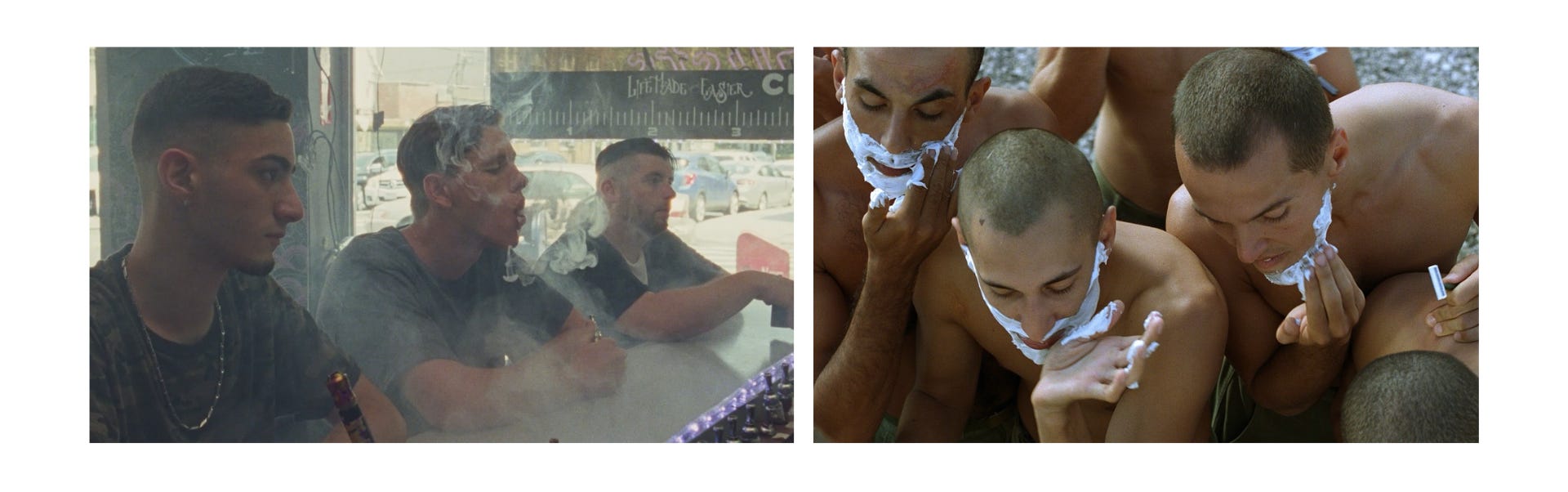
1. Beau Travail | Beach Rats
Beau Travail is my favorite movie of all time and much like Lynch I will not elaborate on that. Partly because idk why it’s my favorite - it just is. And partly because I’d have to give you my entire history and understanding of the world to explain its significance to me and I already told you I’d be brief.
The only thing I will say (so I guess I am elaborating on it a little) is that its conversation between violence and desire gave me new language for a specific part of the world I have both observed and lived inside my entire life.
And then there’s Beach Rats…
quiet. intimate. violent.
But like, Beau Travail, the violence is largely offscreen.
The bloodshed is understood yet unseen.
The danger unspoken.
As if this was the undercurrent holding the entire world together.
There is just something about masculinity viewed through a female lens - in this case Claire Denis and Eliza Hittman - that I find so powerful and compelling and I cannot get enough.
There’s a capacity for appetite... that a whole heaven and earth of cake can’t satisfy ― John Steinbeck, East of Eden
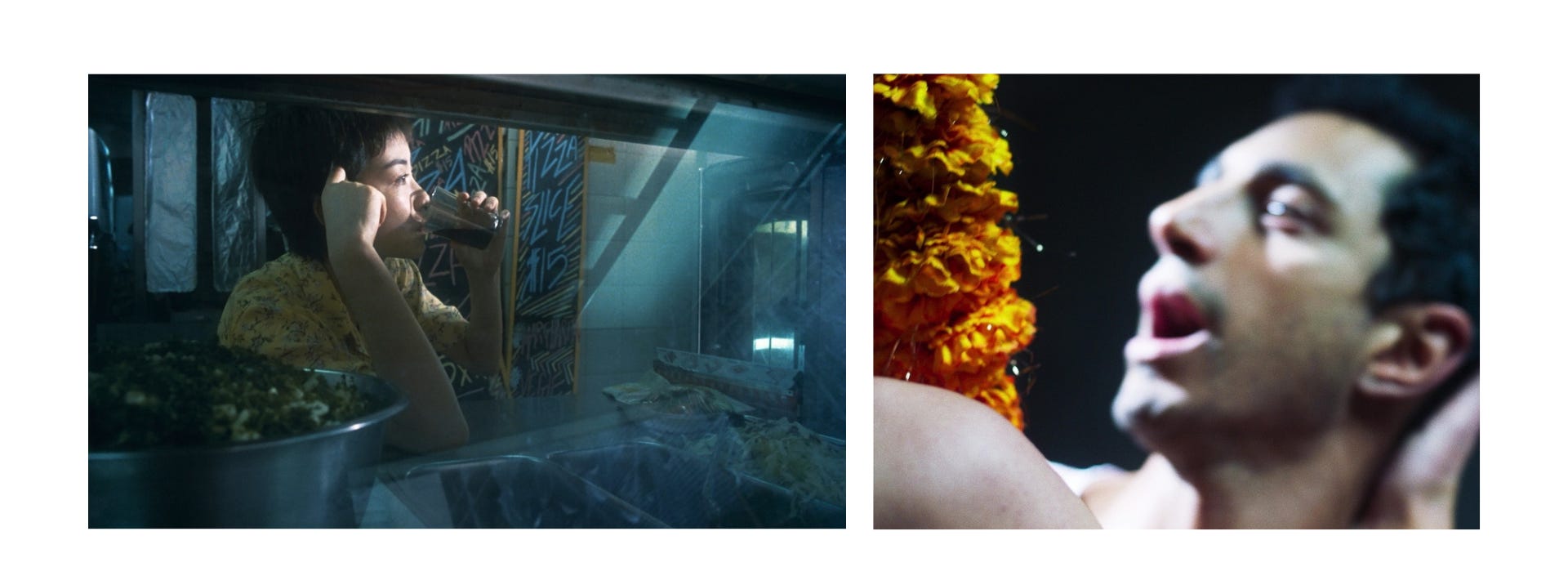
2. Chungking Express | Mogul Mowgli
I believe there are several of us that have Chungking Express as one of our “Top 4” and I’m not kidding when I say I would love to have a virtual group meeting as to why we all find it so wonderful, but until then I can sit in the glow of this piece of cinema and offer this perhaps, unexpected, pairing with it.
I, like Sophie, have a deep admiration for Riz Ahmed (seriously if you haven’t see The Night Of like stop everything and go watch. Don’t even finish reading this post - just like go) and because of this admiration, I of course watched an otherwise obscure film from him called Mogul Mowgli.
I thought the bones of the story and a lot of the execution were just pure cinema. I honestly don’t know why more people don’t talk about it. And I cannot wait to see what he does when he once again feels he has full artistic freedom.
To me these two films embody what the Safdie Brothers try to do with all their films but because they’re american and america is violent above all else (for me) their films are missing a lot of nuance and complexity because, like most of american storytelling, they prefer to hit you over the head with the “point” instead of allowing the chaos of the world to be the catalyst for a deeper understanding of humanity because it showcases humans at their most “desperate.”
Always try to keep a patch of sky above your life. - Proust
3. Red Desert | A Woman Under the Influence
I went back and forth between which one of these two films to add to my “Top 4” as they both unlocked a feminine perspective I hadn’t seen in a film before i.e. they allowed the female protagonist to be messy and confusing and manic without true explanation or without falling into that classic trope of: b*tches be crazy.
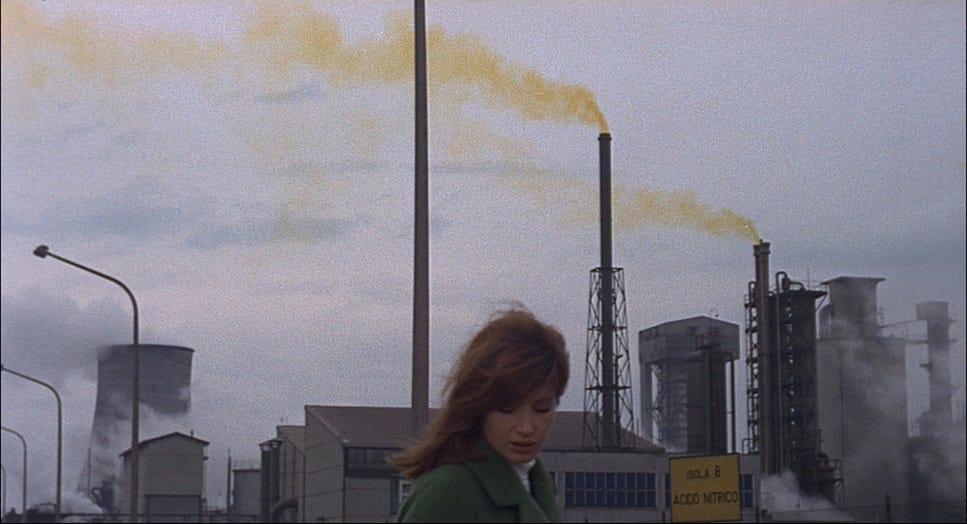
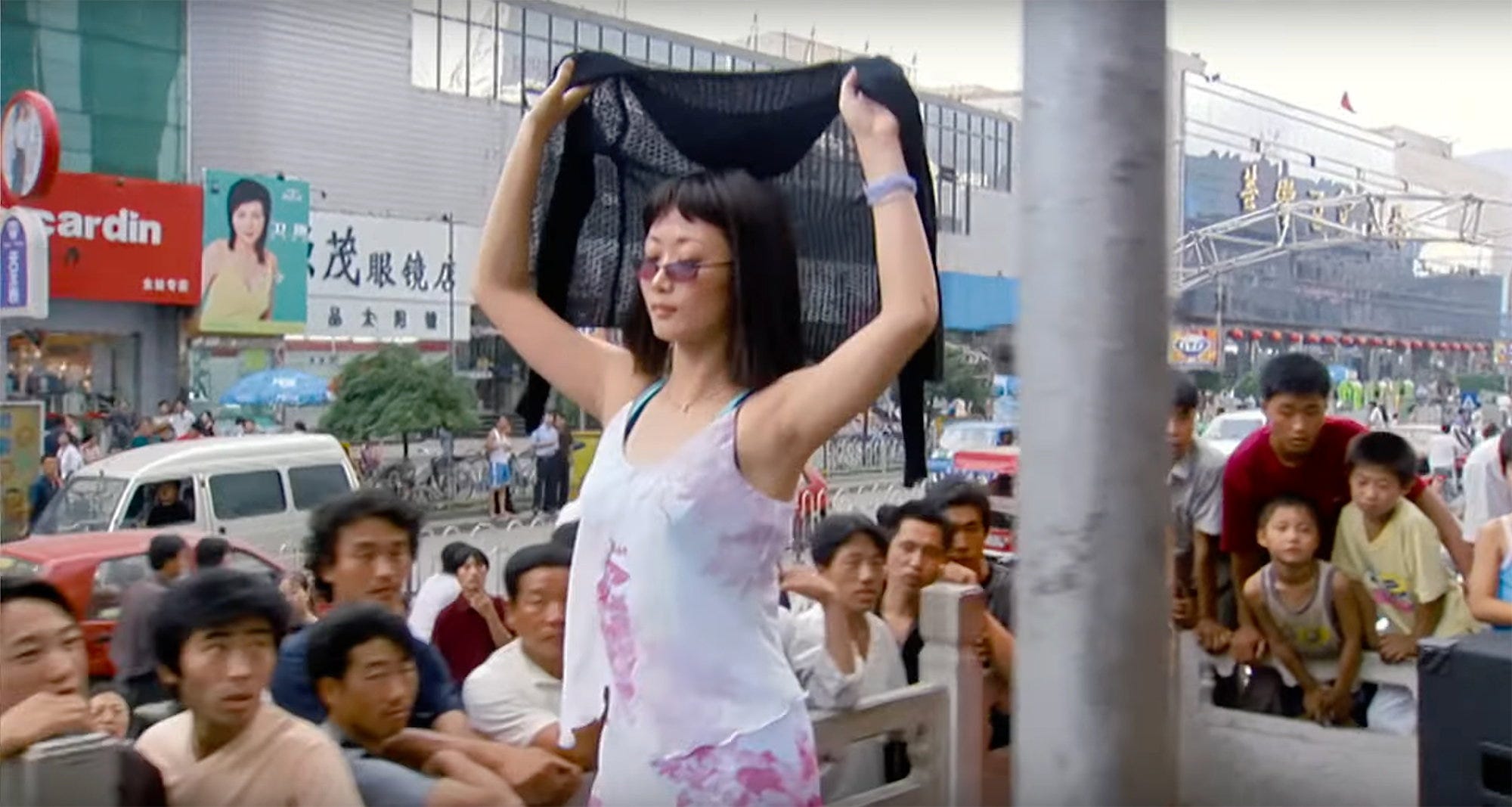
The deciding factor, for me, was Red Desert’s set.
The conversation - or rather argument - this film has between this gorgeous woman and her oppressive, toxic environment will forever be on my mind.
I mean just look at this….
That being said, if I could personally thank Gena Rowlands for her career as an actress I would and no where does that gratitude shine brighter than in A Woman Under the Influence.
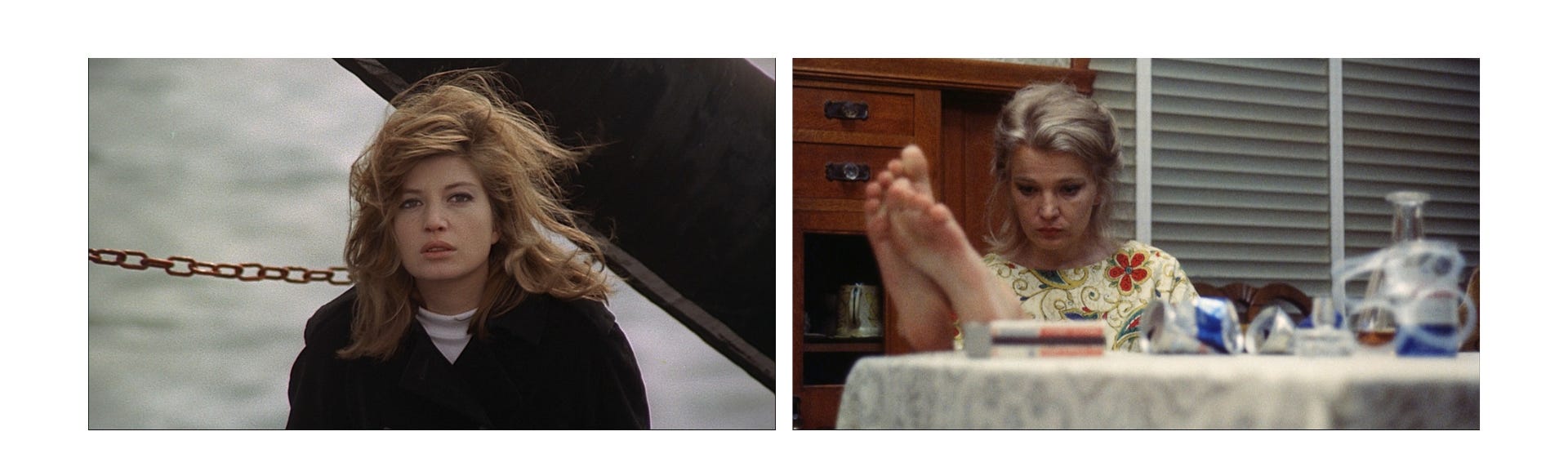
Or was my rage my mother’s? Or her mother’s? Or hers? An inherited creature? ―Lidia Yuknavitch
4. A Tale Of Summer | Blue Sun Palace
It took a long time for me to actually add/keep A Tale of Summer in my “Top 4” as it didn’t have the grit that I so love in other films. (hence the temporary identity crisis.)
But I think this is where its brilliance lies - its able to tell a deep human truth without the pressure cooker scenario necessary to other stories. And it does this without ever feeling lacksadaisical or trite.
One thing you’ll quickly learn about all the films I love is their dreamlike quality.
To quote Michael Lavine in a conversation we had (and whose debut feature I am beyond stoked for:)
isn’t that what all cinema ultimately is? a dream.
And in both these films these particular dreams are summery - which isn’t that just another way of saying full of desire and longing and thus romance - paired with a whole lot of emotional depth and weight. Blue Sun Palace obviously packs more of a punch because the characters are older and age always carries its own weight.
But I can’t explain my attraction and love of A Tale of Summer better than this summary from my friend, Raphaël — The Long Take:
The genius of A Tale of Summer is how seriously it takes emotional immaturity without mocking it. Desire drifts, and attraction contradicts itself.
The protagonist he’s just not ready. (Just like my 11 years old son who already has two girlfriends in 4 months, laisse tomber les filles. You are not rea-dy)
Rohmer understands that uncertainty is not a phase before clarity. For some people, it is the condition of living. The film watches this with patience and sunlight.

It must be noted that Blue Sun Palace also has my second favorite opening scene of all time (my first will be listed later on…)
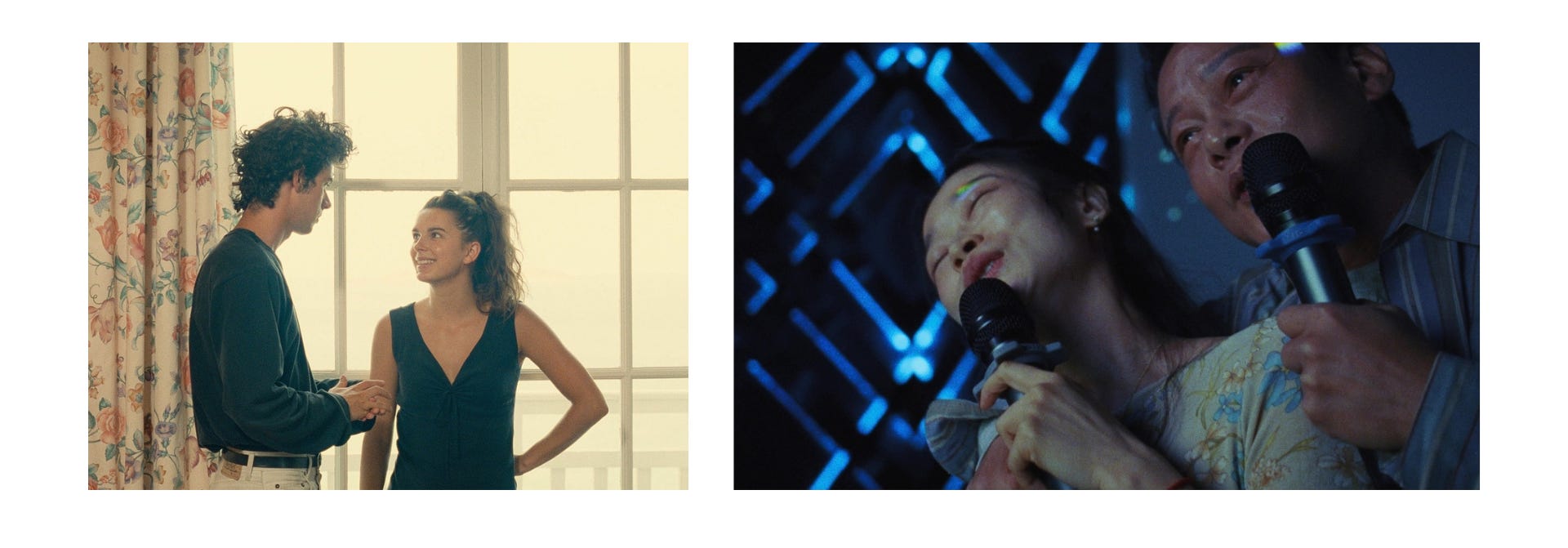
Strawberry ice cream, one spoon for two
And tradin' jackets
Laughin' 'bout how small it looks on you
Watching reruns of Glee
Bein' annoying, singin' in harmony
I bet she's braggin'
To all her friends, sayin' you're so unique.
- deja vu, olivia rodrigo
this concludes my Letterboxd Top 4 Breakdown but for further Cinematic Encounters and Free Associations… read on.
5. Drive My Car | Kaili Blues | Caught by the Tides | Crosscurrent
If Letterboxd had a “Top 5” Drive My Car would’ve been on my list.
Watching it for the first time was one of those singular theatrical experiences where I literally wandered out into the night - world rocked - and when I got to my car I thought my clock had broken because I had no idea it was 3 hours long.
I’m actually kind of a lowkey Murakami fan because he can articulate what the unspoken dark depths of the mind feel like so the film holds an even deeper dearness to me not because Hamaguchi was able to perfectly translate his writing to the screen but because he was able to show the heart of why I love both of their storytelling which is the reality that a lot of darkness and evil and life-altering or ending moments are oftentimes so banal it’s hard to even fully register or explain.
And I know what you’re thinking, Taylor, Drive My Car isn’t about evil or darkness and to that I honestly ask you: have you ever been cheated on or betrayed by someone you deeply loved and had given pieces of yourself to that you gave no one else?
If Letterboxd had a Top 5 and you could tie, Kaili Blues, would’ve been on the list.
(Is this cheating? I don’t care. I reject our collective need to “number” everything anyway… I’m taking you on a journey.)
And later when I feel like my Top 4 needs more “grit” I’ll probably replace A Tale of Summer with Kaili Blues as I am deeply in love with how Bi Gan shapes a cinematic story…so much so that another film of his is on the list further down.
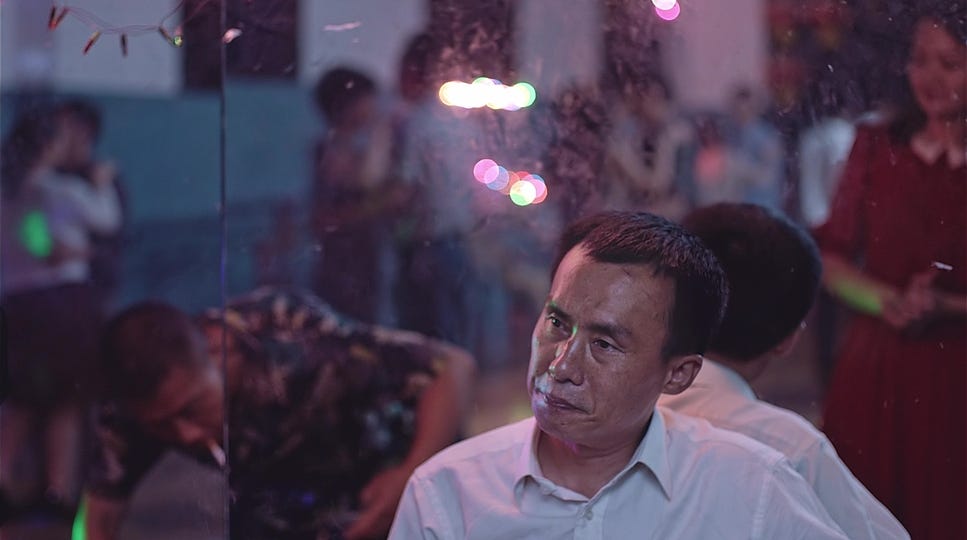
time, memory, and the ghosts we make of one another.
Caught by the Tides was pieced together from old films starring the same actors and creates a love story that exists beyond Jia Zhangke’s entire canon and even cinema as we knew it.
Did I have to watch it in two sittings because it’s slow and largely without dialogue and sometimes my physiological need for a dopamine kick prevents me from presence? Sure.
Did that make it any less impactful?
(Please give yourself some grace as you come down from the highs of constant stimulation to the still cold waters of slow cinema.)

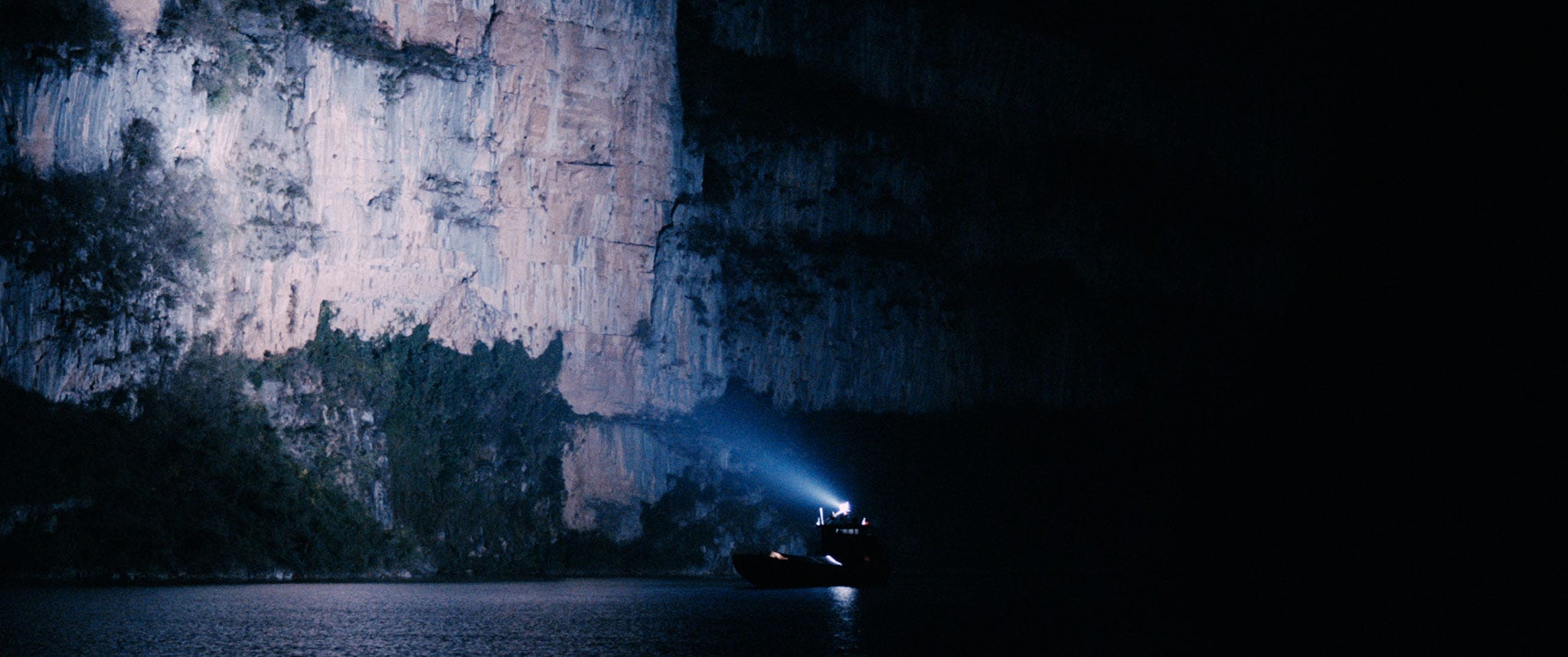
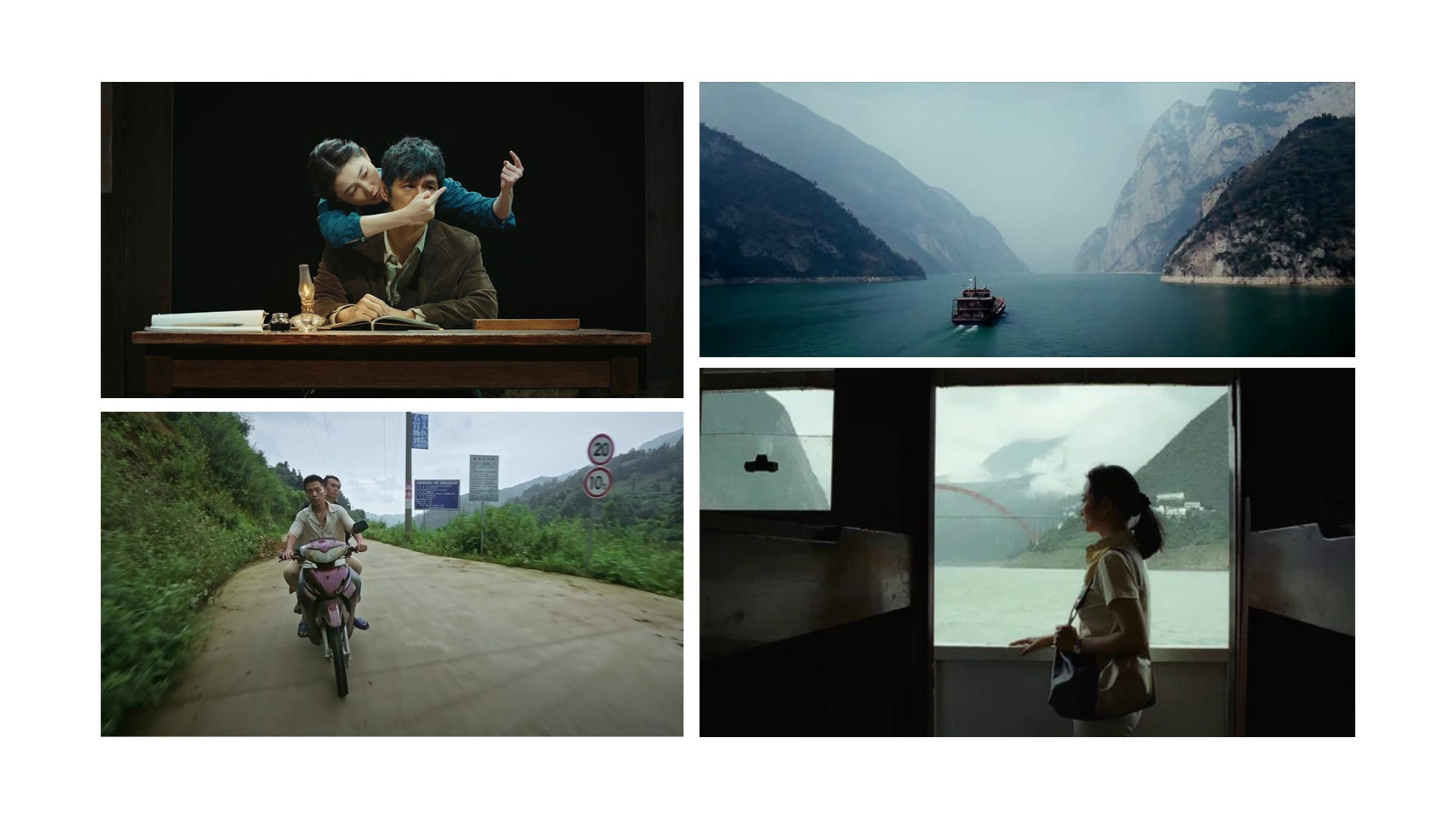
Crosscurrent is hands down one of the most visually stunning films I’ve ever seen. I hope to one day see it on the “big screen.” I’ll let my friend Will Ephlin explain why this film just hits on so many levels even if it wasn’t a “perfect” film for me…It also REALLY does help to read about the history of China that Will has laid out in his post before watching.
It adds so much depth and nuance and who doesn’t love depth and nuance?
The film unfolds in “diary format”, taking us inside Gao’s mind each day as the nights on board begin to blend together. In the tradition of many Chinese narrative films, poetry plays a huge part here, routinely being read aloud over the film in ghostly and, often, confusing ways. Chinese poetry is one of the oldest examples we have of writing, with collections dating back to the 11th century BC still existing today, and that practicality of using it here is clear - there is not a “concise” way to describe the natural beauty, the slow, methodical change, of the blurring of one day into the next with simple narrative film.

the world of dew
is a world of dew,
and yet,
and yet.
- Kobayashi Issa
(fun fact: I first read the above poem on a marquee sign for a restaurant in LA…american culture is way stranger than any of our cinema has collectively embodied or tapped into.)
6. Aftersun | La Ciénaga | La Chimera
If I had to take a guess I think Aftersun might be Substack’s “favorite film” so I won’t go into too much detail here, but….my goodness did Charlotte Wells unlock a new language with this one.
The visual metaphor of “stuck on a crowded dance floor” as a way of showcasing one’s deteriorating mental health and to go even further - generational trauma - deserves its own award.
Shout out to Cameron Andrews for introducing me to the singular revelation that is La Ciénaga. If you want THE case study on how environment shapes characters and how to create a visceral cinematic atmosphere - look no further.
La Chimera, La Chimera, La Chimera…if I could have one movie just constantly playing in the background whereever I am it would be this one- no sound - just the dream Alice Rohrwacher and Hélène Louvart created.
But if I’m interrogating why I linked these 3 films together other than it just makes sense in my mind, it’s because they all have a gorgeous and devastating way of making a nightmare look like a dream.
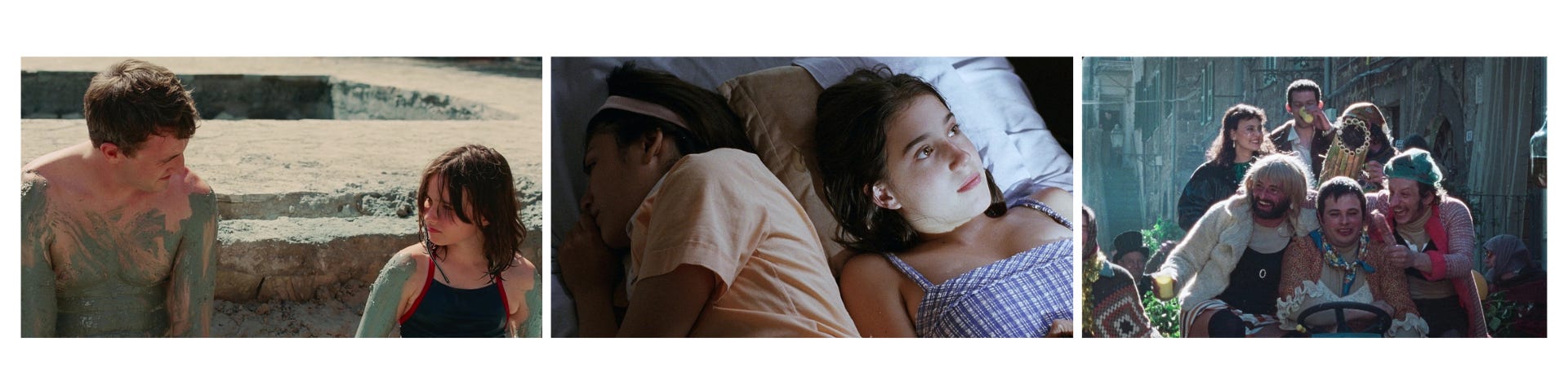
Those things aren't made for human eyes but those of souls. - La Chimera
7. La Jetee/ 71 Fragments of A Chronology of Chance/ Sans Soliel
I don’t think I’ve really stopped thinking about La Jetee since I watched it for the first time this past January… every shot is so unbelievably stunning it’s like walking through some sort of immersive museum exihibit where you’re almost accosted by the sheer beauty of it.
And that part where there’s a “surprise” moment of movement literally made me gasp in awe. And if you haven’t seen this absolute work of art, forget I said anything and just breathe it in.
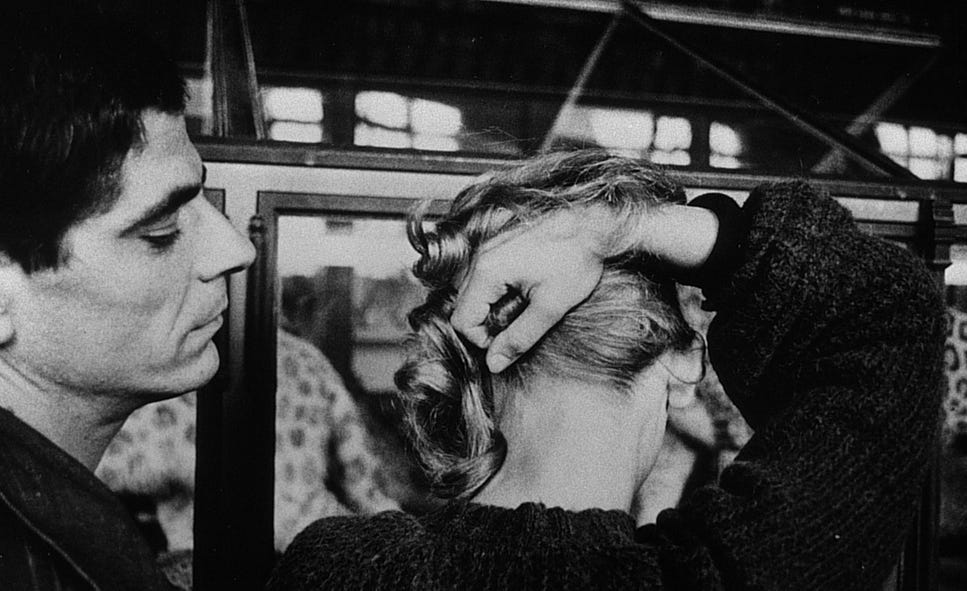
this is hands down my favorite photograph/ movie still of all time.
Now continuing on this mixed media journey with 71 Fragments of a Chronology of Chance. I wouldn’t call 71 Fragments a “beautiful” film, but there’s just so much texture to it visually, contextually, and emotionally that I immediately wanted to study it afterwards to analyze and dissect what I had just witnessed - which truly is one of the best compliments I can give a film.
I want to know how you did what you did and I want to apply it to my own work.
Which leads to Sans Soleil, our second Chris Marker film in this trio.
And I cannot/will not say it better than Dane Benko’s review for his list of “12 Movies That Taught Me the Structure of Cinema” which as I stated before inspired this list and of which you can read in its entirety here.
My private quip is that cinema exists between Man with a Movie Camera and Sans Soleil. Both essay films made by pseudonymous multimedia artists ever looking around the world to fulfill something they’re processing inside, Man with a Movie Camera insists on the promise of the moving image whereas Sans Soleil reveals its betrayal. - Dane Benko
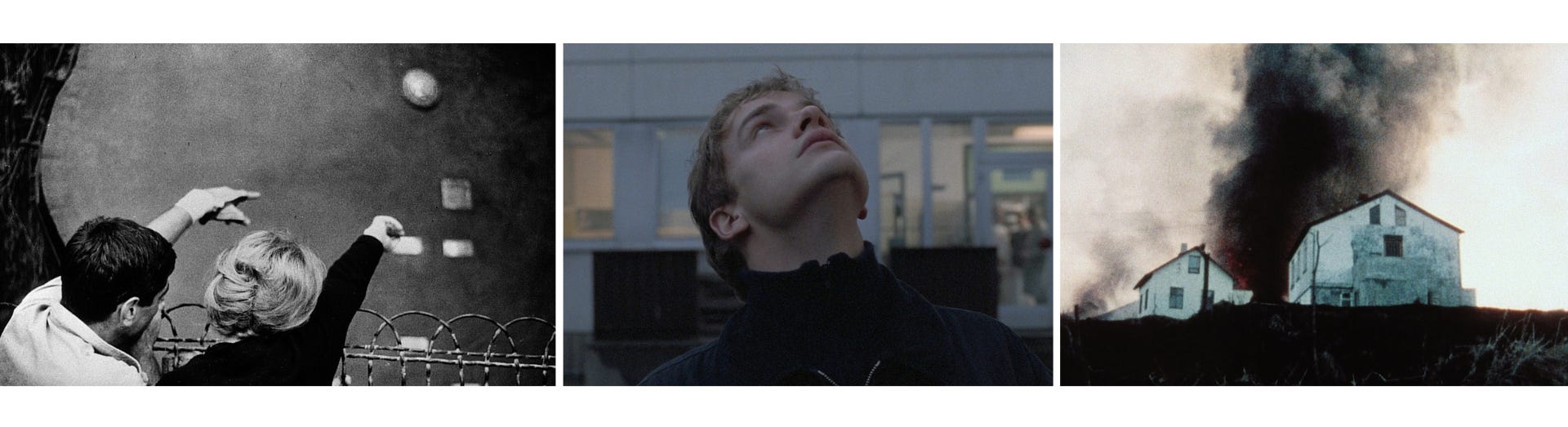
Modern mass culture, aimed at the "consumer", the civilization of prosthetics, is crippling people's souls, setting up barriers between man and the crucial questions of his existence, his consciousness of himself as a spiritual being. ― Andrei Tarkovsky, Sculpting in Time
8. Killer of Sheep | Mean Streets | Taste of Cherry
I would link these films by saying they have no awareness of sky.
If Chungking Express and Mogul Mowgli offered us ‘pockets of air’ in the desparation, Killer of Sheep, Mean Streets, and Taste of Cherry all have characters where the desperation feels so lived in it seems to stagnate. Mean Streets obviously posseses the most forward motion but even it again feels so “lived in” - and thus hopeless -
as if the entire environment has simply gotten used to the proverbial elephant on its chest.
for me they also all seem to weave violence into an everyday type of poetry.
the underlying question each film seems to ask is:
‘ultimately am I watching these people live or die?’
and each film creates a singular rhythm of how the answer is both.
I will say Killer of Sheep is hands down one of the greatest movies of all time…I don’t care about the list requirements. It’s a work of art that should absolutely be discussed more than it is.
I love what Sophie said in her review of Mean Streets in her list of “12 Films that Taught Me How to Actually Watch a Film.” I also love the Sophie, Dane, and I approached our lists slightly differently based on our own perspectives and what more can you ask for from a “prompt.”
I’ve always had a bit of a soft spot for what I call the “pity pause,” the beat at the end of a film that asks its audience to sit with the knowledge that the protagonist isn’t going to be okay, and neither are we. Mean Streets has one of the best pity pauses in cinema, and the question it leaves me with is simple: what are you going to do about it? - Sophie
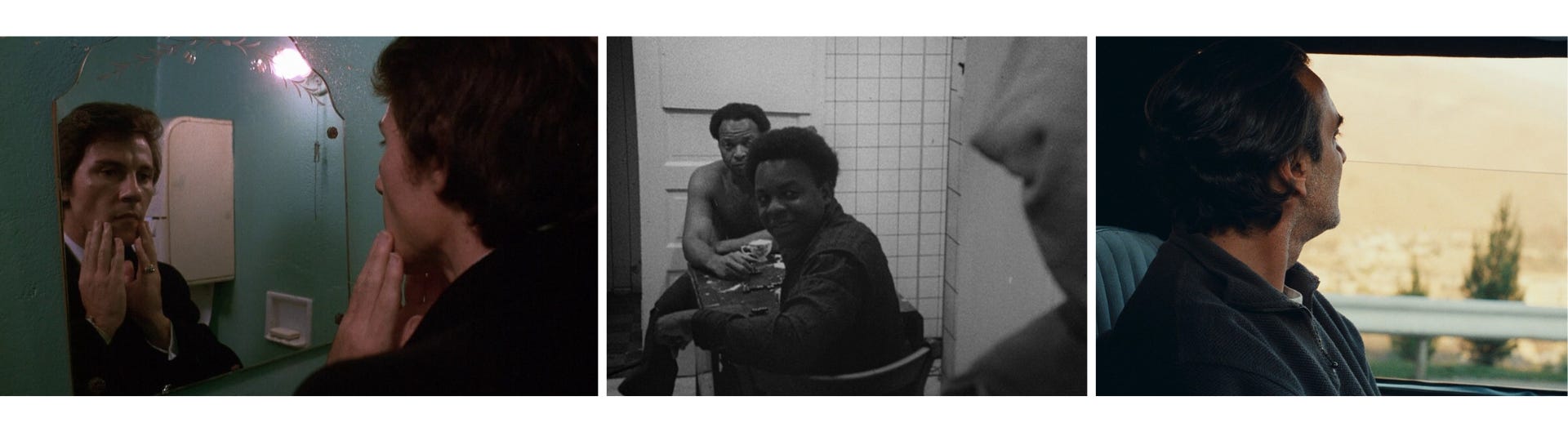
No mother can fill her fridge with such a variety of fruit for her children. No mother can do as much for her children as God does for His creatures. You want to refuse all that? You want to give it all up? You want to give up the taste of cherries?
9. My Own Private Idaho | Midnight Cowboy | Honey Boy
I think about River Phoenix sitting at the campfire confessing his love to Keanu Reeves probably once a day. Again to tell you what River’s “performance” in this film means to me I’d have to give you a history of my world - of the world - and I already told you I’d be brief.
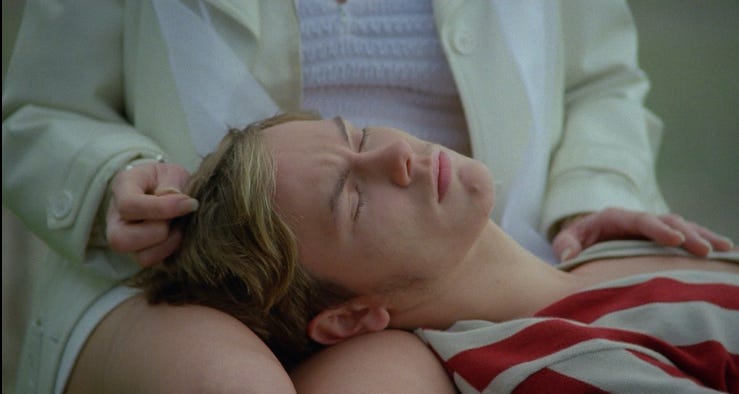
These aren’t a group of films I talk about often - my love and appreciation for them - and how their seedy and sexually perverse surfaces is simply the environment or vessel that points out a much deeper human truth - how to love and be loved in a world of transactions. Because I think with respect to the subject matter this requires a much more nuanced conversation than, “I loved this film” and so I find it best not to mention until the opportunity for a deeper conversation presents itself.
We live in a messy entangled world.
One where money and bodies are oftentimes interchangeable types of currency.
This isn’t a subject a lot of people want to tackle much less with such nuance and empathy as this particular trio does.
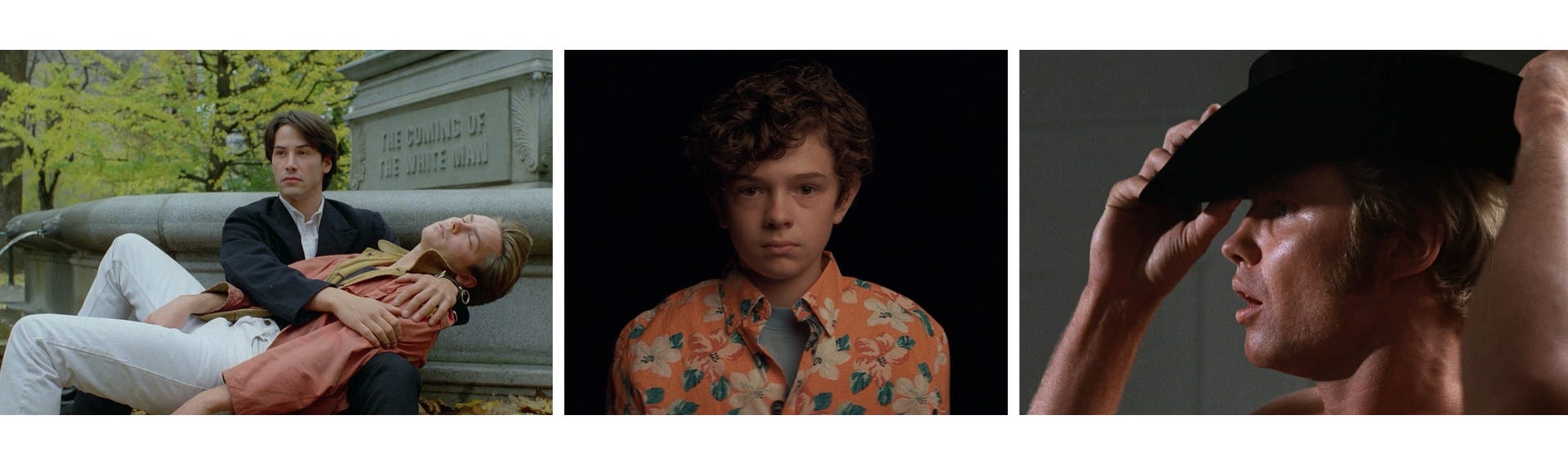
You know, a seed has to totally destroy itself to become a flower.
That's a violent act, honey boy.
10. Memento | Collateral | The Long Goodbye
There’s just something about Los Angeles…
In the future I’d like to start a series breaking down films shot in Los Angeles called “City of Angels, Lives of Devils” but for now let this be the only intro you need.
If you’ve never lived in Los Angeles, let me let you in on a not so secret secret - Los Angeles seems to be the breeding ground for a very specific type of darkness. In that there is something about the environment that I believe produces a singular facet of American identity that you cannot find anywhere else although it seems to infect everywhere else.
Which is why a lot of movies where Los Angeles is the setting have such eccentric characters because it produces a very specific type of desperation.
In keeping it brief and not going into detail how much I “love” all three of these films, here are the highlights for me:
Memento: the most artistic example of “senseless violence.”
Collateral: that coyote scene elevates it into an american fable.
The Long Goodbye: Elliot Gould’s mumbling, meandering performance of someone on the “outskirts” of society that doesn’t once feel ‘self-indulgent.’
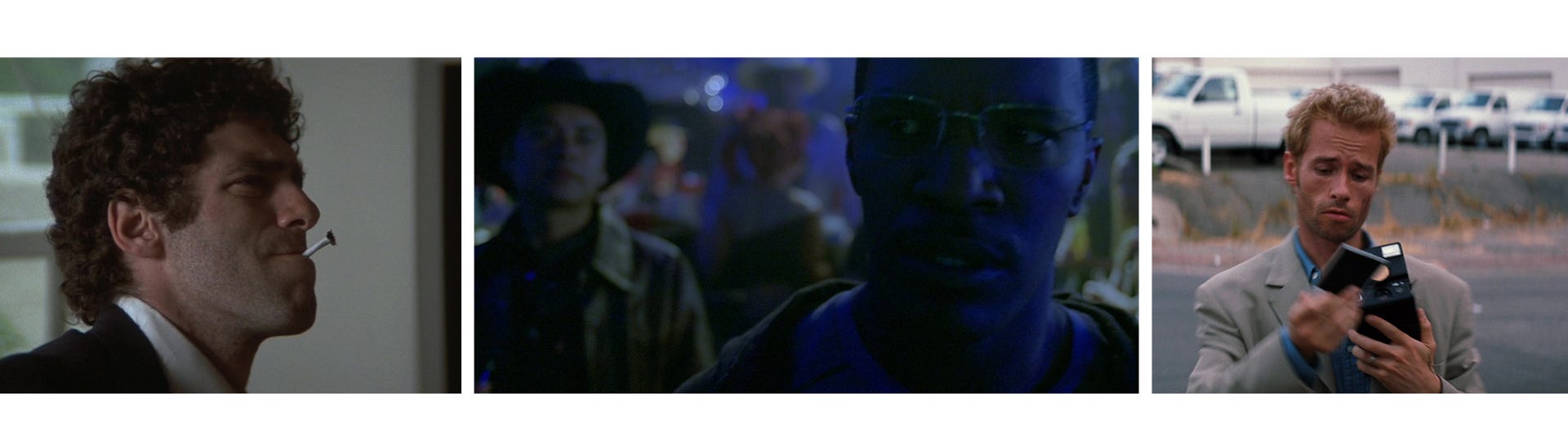
What would people look like
if we could see them as they are,
soaked in honey, stung and swollen,
reckless,
pinned against time?
- last line of Ellen Bass’ ‘If You Knew’
these last four films on the list I feel qualify as my most singular “encounters” with cinema as an artform. In that I feel they all took me into a “new world” I had never set foot in and my life or how I look at the art truly hasn’t been the same.
To me, these four films embody cinema as craft.
11. Werckmeister Harmonies | Diamonds of the Night
Werckmeister Harmonies has the greatest opening scene of all time in my humble opinion. And Beau Travail obviously has the greatest ending. And I realize in making this list out (which is why I encourage you to make your own “cinematic foundation of free associations because you start to see threads in all the movies you love and it really does tell you a lot about yourself and how you view the world.) that they are both “dances.”
Which gives me a deeper understanding of cinema as a ‘choreographed dance.’
Werckmeister Harmonies and Diamonds of the Night are both unbelievably stunning visually and absolutely devastating narratively.
There is a moment in Diamonds of the Night that was so viscerally painful to watch I had to pause it and regain my equilibrium before continuing. And it wasn’t exploitative or shock for shock’s sake that so many movies embody…it truly felt like one of the most affective ways I’ve ever seen the artform used and really did unlock a new understanding for me.
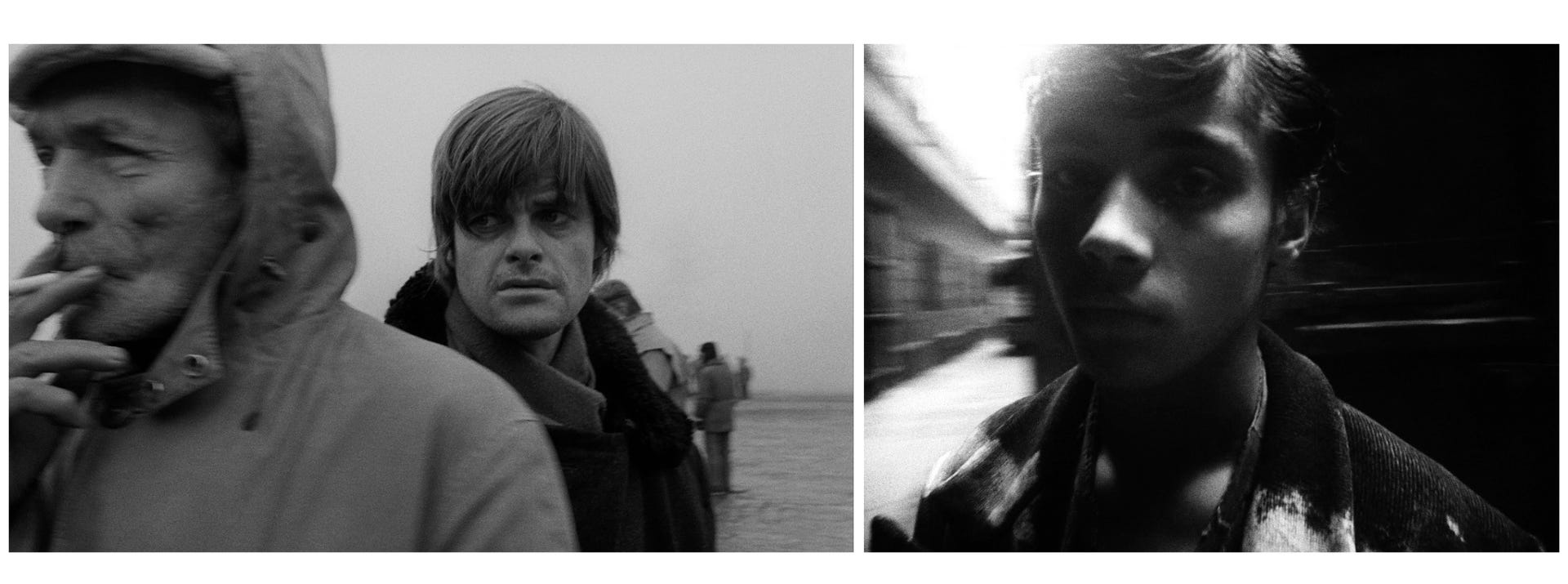
You are the sun. The sun doesn't move, this is what it does. You are the Earth. The Earth is here for a start, and then the Earth moves around the sun. And now, we'll have an explanation that simple folks like us can also understand, about immortality. All I ask is that you step with me into the boundlessness, where constancy, quietude and peace, infinite emptiness reign.
- Werckmeister Harmonies
12. Vertigo | Long Day’s Journey Into Night
I haven’t seen Vertigo since middle school but I think about it all the time. Even then, I remember feeling I had encountered something singular.
Something psychological and surreal. Something both beautiful and dangerous. Something desperate and so utterly human.
I know it’s high time for a rewatch.
And as stated previously here is our second Bi Gan feature on the list.
I know I wrote this in a note before, but I cannot explain this film better than it felt like I had truly stepped into a new world.
Every moment in it I felt I was encountering a new way of translating a story to screen.
And the ending….the ending. the ending.
Literally took my breath away.
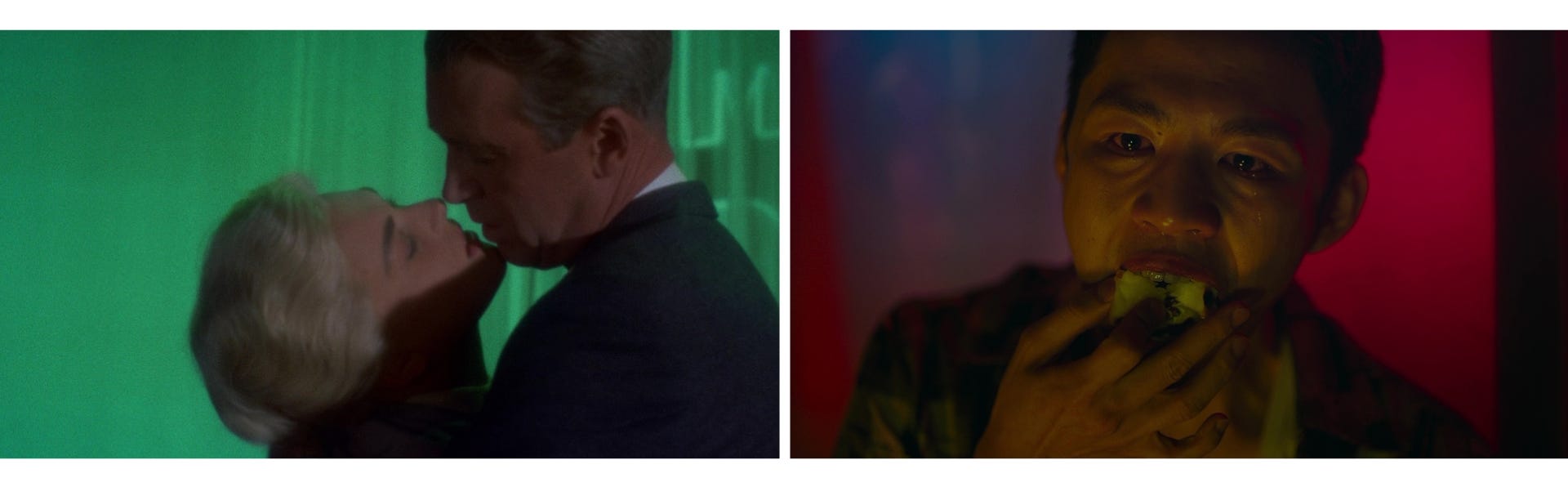
Where can we live but days? - Phillip Larkin
Closing Thoughts:
When I first set out putting this list together, I thought it was a way for me to better articulate and contextualize the aspects of cinema I find so compelling.
How cinema is a dream and a dance.
And that the ‘best’ films are textured and layered and continuously explored.
I thought I’d tell you that along with dreaming and dancing, in my own projects I’m really excited to further explore memory, time, sound, and atmosphere/environment.
But after putting this list together and seeing it all laid out - I’m struck by just how many of the films I love are both beautiful and violent. And that my “temporary identity crisis” in putting A Tale of Summer in my “Top 4” came from loving something that wasn’t inherently ‘dangerous.’
I told you that in my favorite film of all time, Beau Travail, there is a conversation between violence and desire which gave me new language for a specific part of the world I have both observed and lived inside my entire life.
A world I am actively leaving behind more and more each and everyday as I heal and learn to love things that do not simply take from me and as I accept and believe that it is possible for a life - and a world - outside of the violence.
I guess what all these films lead to and where my current cinematic voice resides is that: I’m trying to tell you what it’s like being a woman living inside a man’s world.
Again, thank you to Sophie and Dane Benko for providing such an expansive entry point as to how to think about movies through the contextualization of your own ‘personal picks.’
I highly encourage you, dear reader, to make your list as a way to understand your own tastes and preferences better both as a maker and watcher of cinema.
We live in the age of algorithms which prevent us and keep us from honest discovery.
But I think the more we understand ourselves through the movies we watch and vice versa, the better equipped we’ll be to journey through all the noise and have a true encounter.
No man is an island, entire of itself; every man is a piece of the continent, a part of the main. If a clod be washed away by the sea, Europe is the less, as well as if a promontory were, as well as if a manor of thy friend’s or of thine own were: any man’s death diminishes me, because I am involved in mankind, and therefore never send to know for whom the bells tolls; it tolls for thee.
-Devotions Upon Emergent Occasions, Meditation XVII, John Donne
Absolute stunners among these picks! I loved reading this. And, well, I'm enamored with a Lucrecia Martel film, a Claire Denis film...always. Thanks for sharing these ruminations. This corner of the internet feels whole with these righteous texts to sift through.
So many films to discover, thank you Taylor!!!