

Films in Conversation
or why the future of cinema isn't just about watching movies

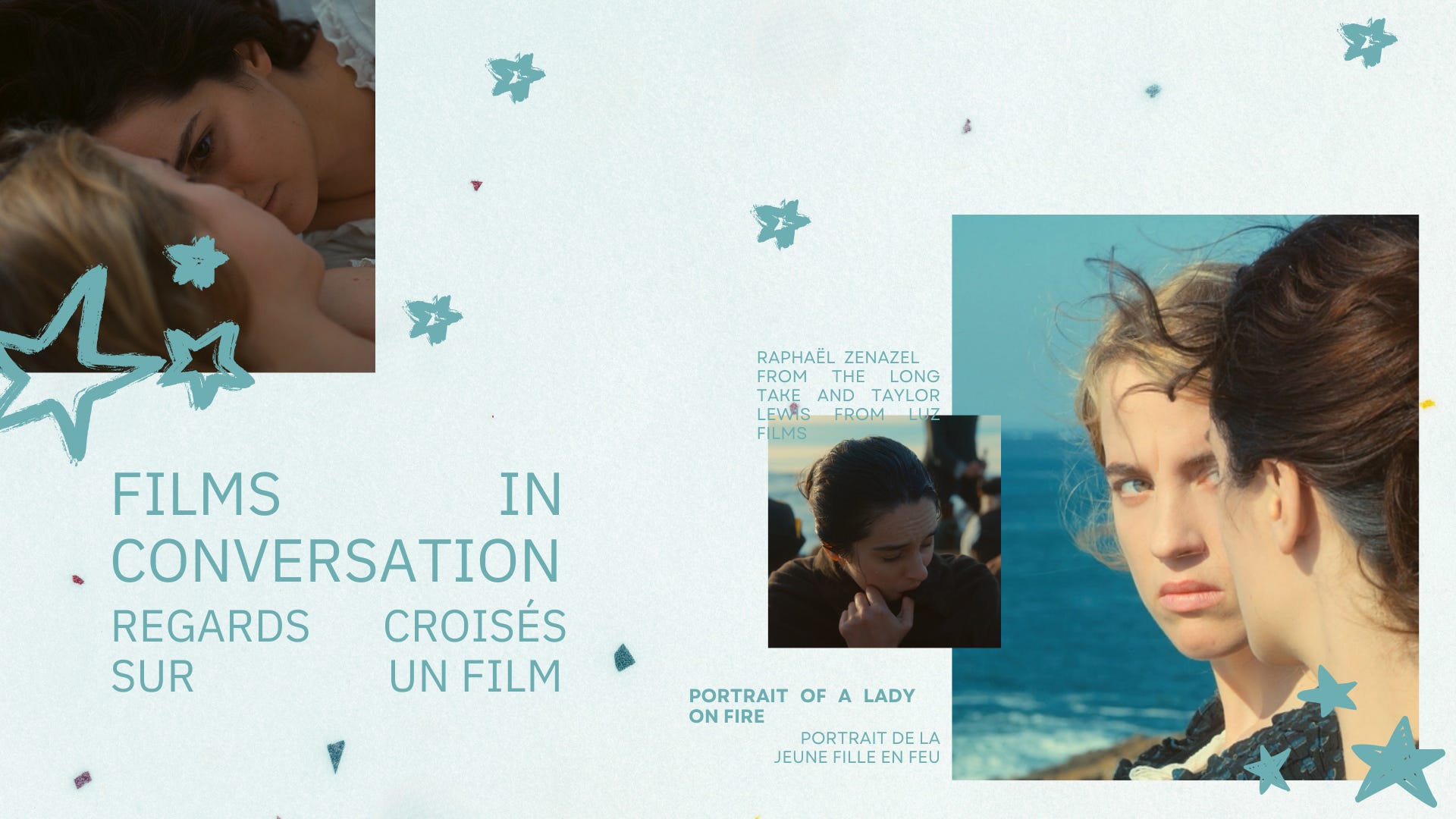
This platform has allowed me to experience some of the most expansive, life-giving conversations I have ever had. It has sharpened my language and understanding of cinema beyond my wildest imagination. And it is a gift to be surrounded by a group of people who aren’t just visionaries in the film world today, they are active builders of what that world will be tomorrow.
If you’ve been a part of this community of film lovers long enough, you know that along with being obsessed with the art of cinema and experiencing it firsthand, we are also a group of individuals who love talking about what we’re watching. The movies that are "blowing our minds" and "altering our lives forever." The ones we can’t seem to shut up about or on the contrary, ones we have yet to form the language of just what they mean to us.
“Great cinema, like all great art, invites conversation as much as it invites viewing.”
This was the principle behind a collaboration post I had the immense pleasure of doing with Raphaël from The Long Take; a fellow film lover I deeply admire and someone who I believe is actively changing the way we talk about movies one open conversation at a time. His relationship with film and ability to articulate these works of art in a way that is inviting instead of off-putting or elitest is another singular gift.
In fact he just began a series on cinematic language that will no doubt deepen the conversation and understanding people who read it will have with cinema.
We notice these things emotionally before we ever notice them consciously.
That’s what cinematic language is: the set of tools filmmakers use to guide our feelings and attention without spelling everything out in dialogue. It’s how a film “speaks” through images, movement, sound, rhythm and human presence.
In this series, I’m breaking that language into five core pillars. Not in a film-school, théorie-heavy way -relax- but more in a way that helps you watch movies with fresh eyes. The goal is not to turn you into a critic. Just to help you recognise why a moment hits the way it does.
I’m starting with one of the most important and least talked about pillars: mise en scène.
Below is the conversation we had on one of my favorite films from a director I believe is also changing our understanding of what cinema is -
Céline Sciamma and her 2019 masterpiece, Portrait of a Lady on Fire.
But before we dive into our exploration on the two ways of looking found in the film, I’d like to highlight five other “critics” who I believe are also contributing to cinema’s future - one film conversation at a time.
Charlotte Simmons who not only developed the idealogy and narrative behind “the new film criticism” on her publication, The Treatment, but has also just began a new endeavor with fellow Filmstacker, Kelli McNeil-Yellen at KLA Media Group called Film Soup Zine which is a “dedicated space to review indie films and interview indie filmmakers.”
The new film criticism will not be about longform scores and judgements, and will not retreat into complacent subjectivity so as to avoid the challenge of discourse. No, it will have a conversation with the film — a conversation as objectively real, tangible, and critiqueable as the film itself — so as to spark even more conversation. It will be a forest of diverse observation rather than two opposing bubbles of opinion.
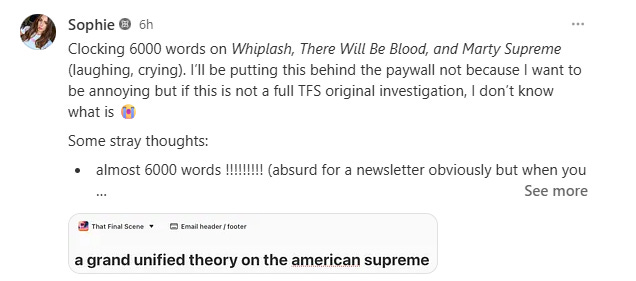
Sophie from That Final Scene continues to expand the conversation around movies in ways that continually leaves me in awe and delight.
3. Who better to discuss and educate a group of people on the art of cinema than a cinephile and film professor of which Dario Llinares is both. His in-depth analyses put his academic background on full display and believe me your mind will be all the better for it. He’s also happens to be on the pulse of what is necessary in our cinematic world right now…
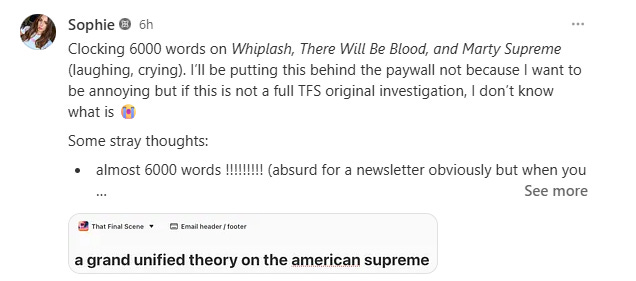

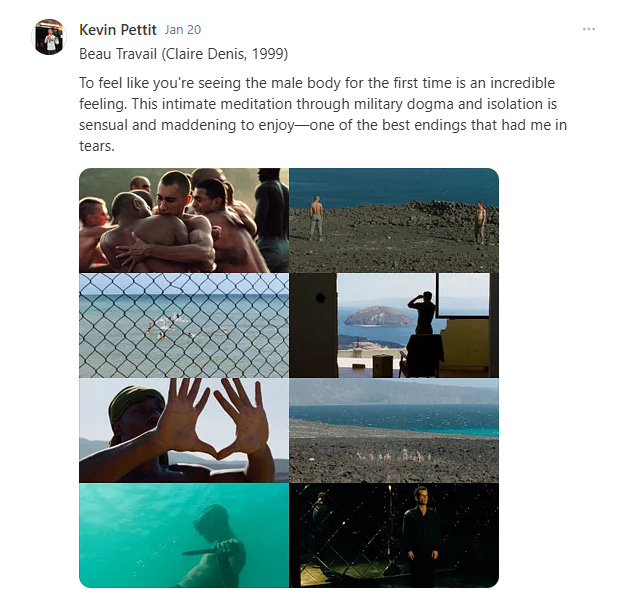
I truly am in consistent disbelief of Kevin Pettit’s ability to not only watch the amount of movies he does, but to also consistently invite people into the conversation surrounding the film he’s just watched. He also is someone I would deem “the king of notes:”
Decarceration’s voice is so unbelievably unique and necessary for the times we are in and he is another whose consistency in movie viewing blows my mind. (if you can’t tell for a cinephile, I don’t really watch movies that often (lol) In fact ya’ll got me watching more consistently than I have my entire life so thank you.)
He also has the best title/ subtitle combo in the game…
Uniting the worlds of cinema and criminal justice, one movie and one movie lover at a time
This fine group of people to me would make any newspaper publication proud to have on as a rotating list of “critics” and it is my unwavering belief that sometime very soon a Substack “column” will spring up with just that intent. Whether it’s in addition to the conversation started over at Film Soup Zine or in expansion of it, one thing to me is very clear: the future of cinema is incumbent on our ability to have conversations about it that don’t include box office numbers, marketing budgets, or celeb brand deals.
These kind of conversations are obviously already taking place and it’s just a matter of time before the “media” catches on.
Now without further ado…
Films In Conversation with Raphaël Zenazel and Taylor Lewis.
Portrait of a Lady on Fire: Two Ways of Looking
When presence begins to turn into memory
I. Raphaël
I have been trying to name why Portrait of a Lady on Fire lingers the way it does. It’s not only the romance or the ending. It’s the way the film looks at its own moments.
At times the film feels completely inside the present, as if looking hard enough might slow down the time, and at the same moment, it already seems to be looking back, aware that what I’m watching is finite, already turning into memory. There is a tension between two ways of seeing and I think the soul of the film lives there.
There are moments where the attention feels physical. The camera lingers on a face, a gesture, the space between two people and looking begins to feel like a form of touch. These scenes simply stay, the shared presence is enough to hold the moment in place.
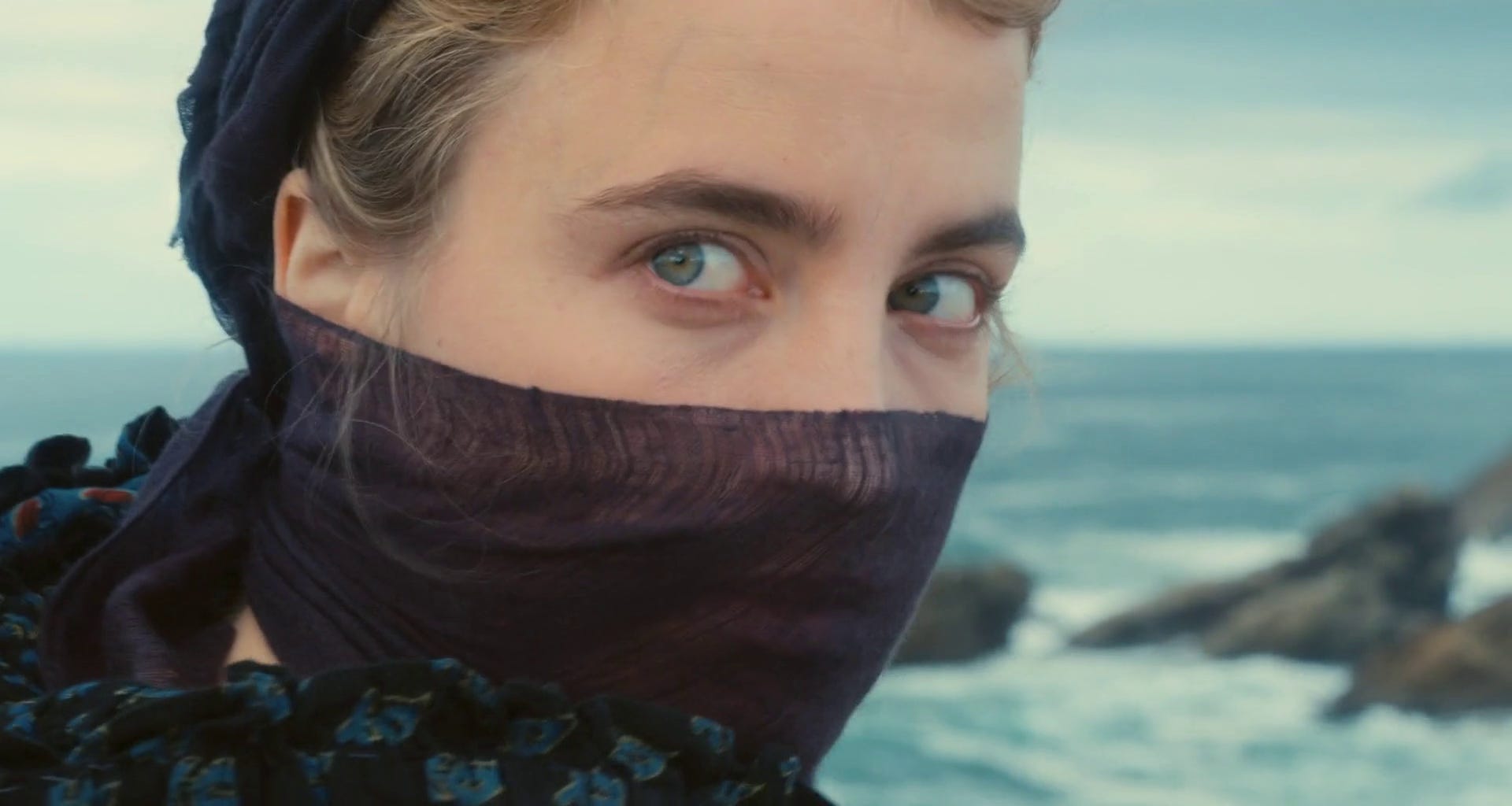
This feels close to how lovers look at each other — not analyzing, just being there — yet, the stillness carries an awareness that no intensity can stop time from moving forward.
Gradually, another kind of looking slips in. It is not colder or less emotional but it carries a different awareness. The attention becomes more deliberate, more shaped. Looking starts to feel like something that knows it will have to remember.
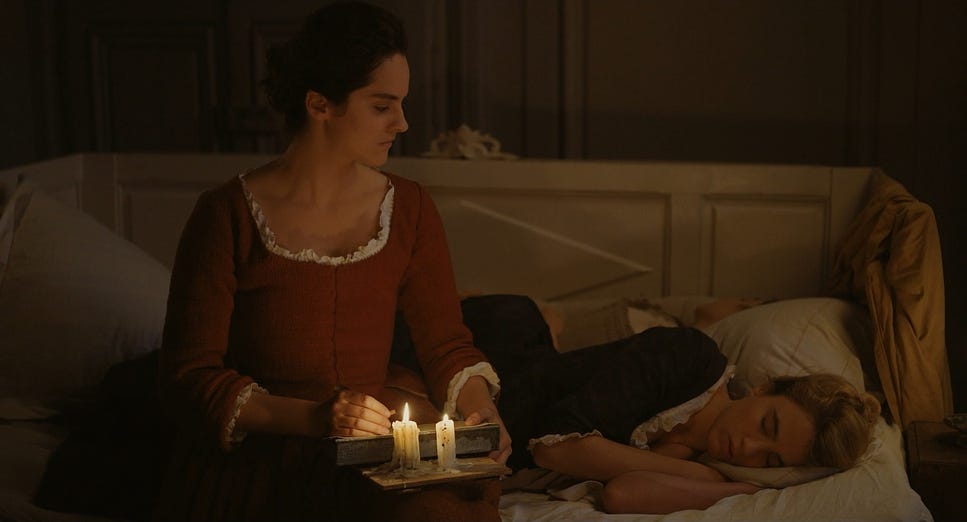
The film grows conscious of form, of framing and repetition. Marianne and Héloïse try to live as if the edges of time spent together were not there.
Painting sits at the center of this shift. To paint someone is to look with care but also with distance. It’s intimacy that admits its own limits. Like a way of holding someone close while already translating them into something that will survive their absence.
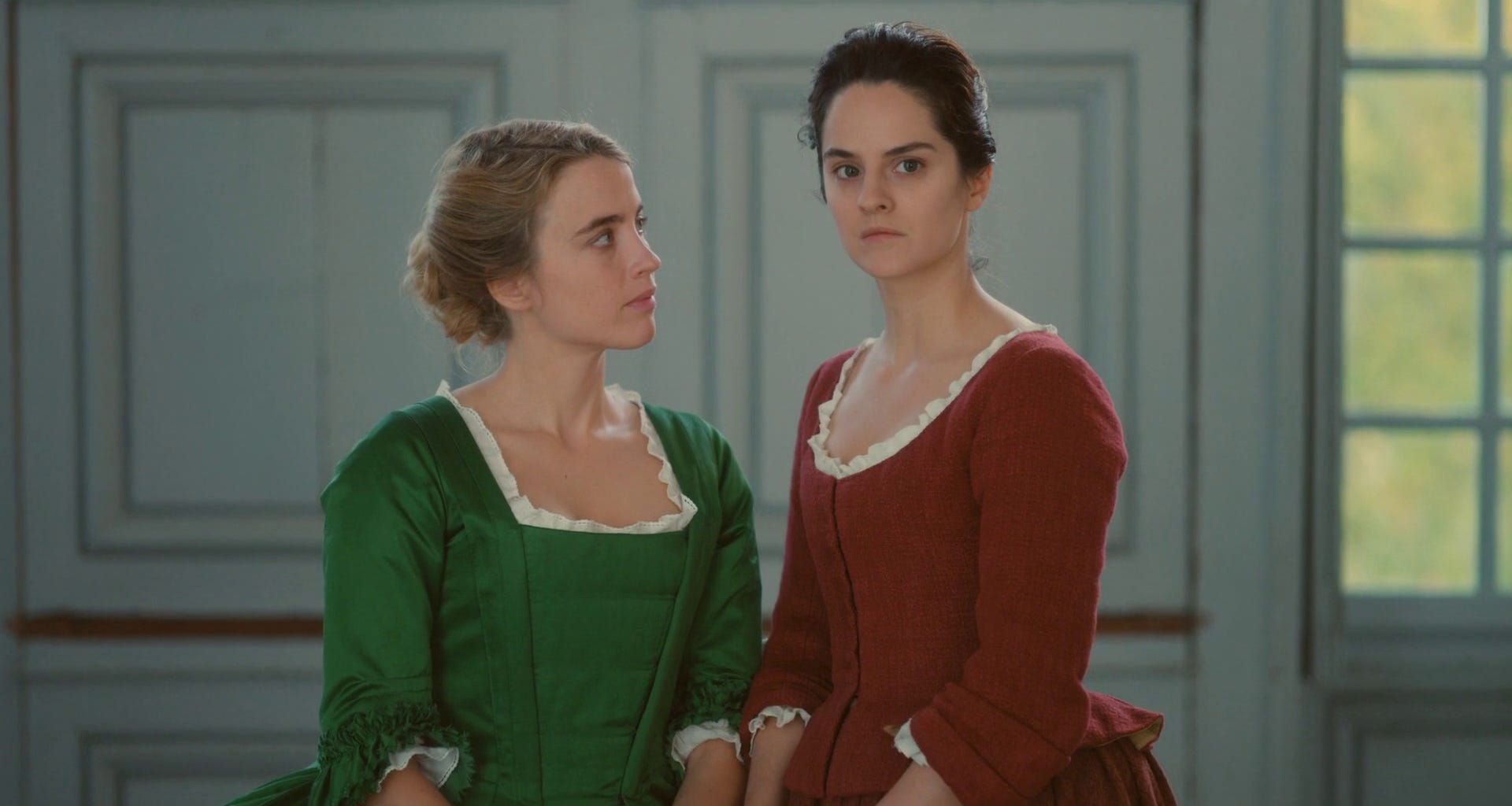
Portrait of a Lady on Fire does not treat this as a betrayal of feeling and if anything, it suggests that truly seeing someone also means understanding you cannot keep them.
What gives Portrait of a Lady on Fire its emotional weight is that these two ways of looking rarely separate. Its most powerful moments hold both at once. A glance can feel immediate and already remembered. A shared silence can feel alive and archival at the same time. The moments are being lived and mourned in the same breath.
The pain comes from loving something while already feeling the shape of its ending pressing against the present.
As the film reaches its final scenes, presence shifts into another form. What remains is a different kind of attention. It’s an attention that carries love forward in its own way. Memory is treated as responsibility, a continuation of presence in another shape.

I think the film invites us to hold both ways of seeing at once. It lets us feel what it’s like to live inside both — to want the moment to stretch and to sense, at the same time, the contour of its ending. That double awareness gives the film its stillness, its restraint and its afterglow.
This may not fully explain Portrait of a Lady on Fire and it does not need to. Thinking about these two visions, the lover that wants to stay, and the poet that already knows it will have to remember has changed how I experience the film. I’m curious how it resonates with your experience or what other ways of looking it opens for you.
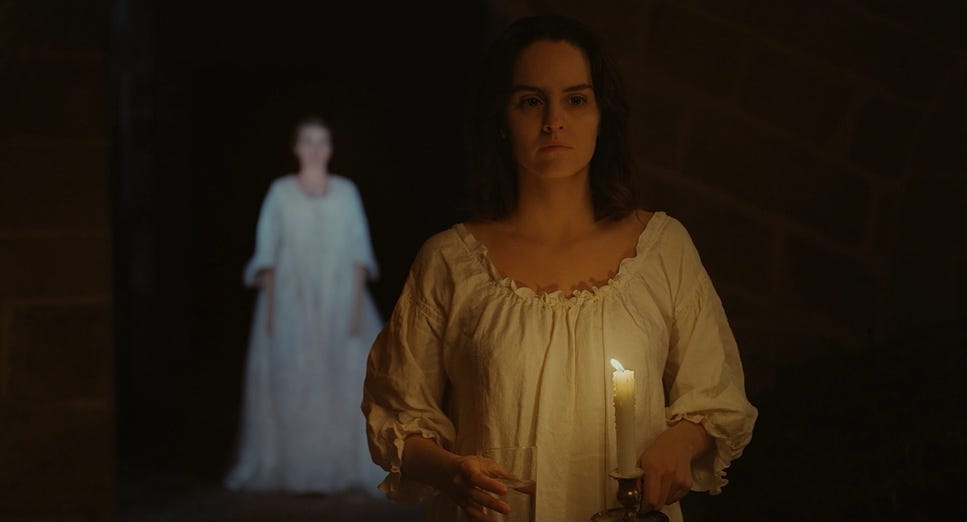
“He chooses the memory of her. That’s why he turns. He doesn’t make the lover’s choice. But the poet’s.”
II. Taylor
I love your observation of why the film lingers is because of the way in which it looks. For me this film exists entirely as a conversation on the act of looking.
Of course there is the obvious story thread of a painter having to look at her subject in order to paint her, but then there are the more subtle ways in which the conversation deepens as the two women begin to truly see one another.
Their relationship starts out as a broader conversation of women as subject, as object, even as reluctant muse. Marianne, in order to paint her properly, is observing every aspect of Héloïse physically - her ears, her eyes, her hands and as she observes so does the audience. But as the trust builds between the two, the physical admiration turns into something internal: from looking to seeing to knowing. And to be known by another, to be truly seen, is the foundational attribute of love.
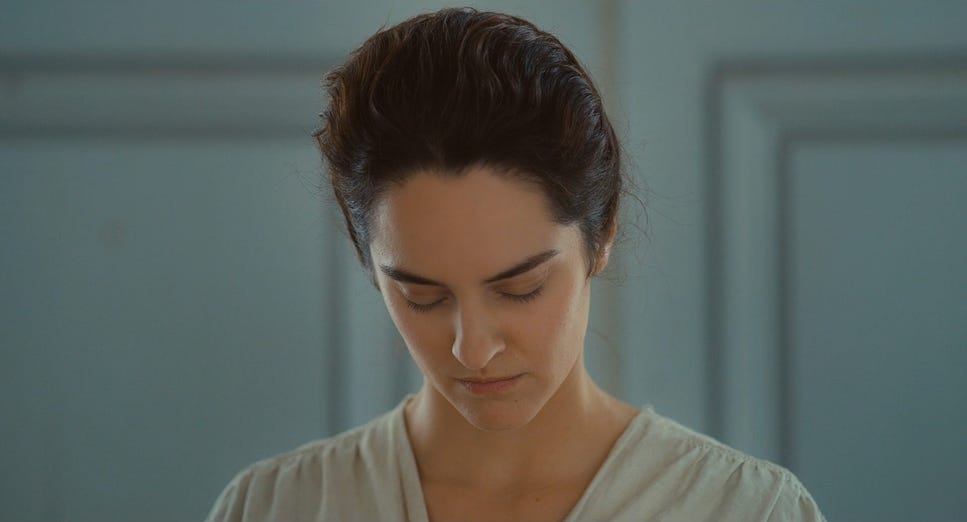
One of my favorite moments is when Marianne attempts to paint her for the first time and tries to recall all of the times she’s spent looking. She closes her eyes and in that moment exists a foretelling of looking as a form of memory-making. As if the absence could already be felt. It’s the first sign of struggle between the lover’s glance and the poet’s.
Later on, as Marianne begins to see visions of Héloïse dressed in white - a foreshadowing of her inevitable marriage - the memory then shifts into something somber as Héloïse’s memory already begins to haunt Marianne.
As you’ve also pointed out, another thing that struck me upon rewatch was how “present” the film feels. To me it seems to embody that overused sentiment of a love that makes “time stand still.”
The phrase itself might be a cliché, but being able to create the feeling of actual time standing still is another skill entirely and Sciamma proves herself a true cinematic craftsman here.
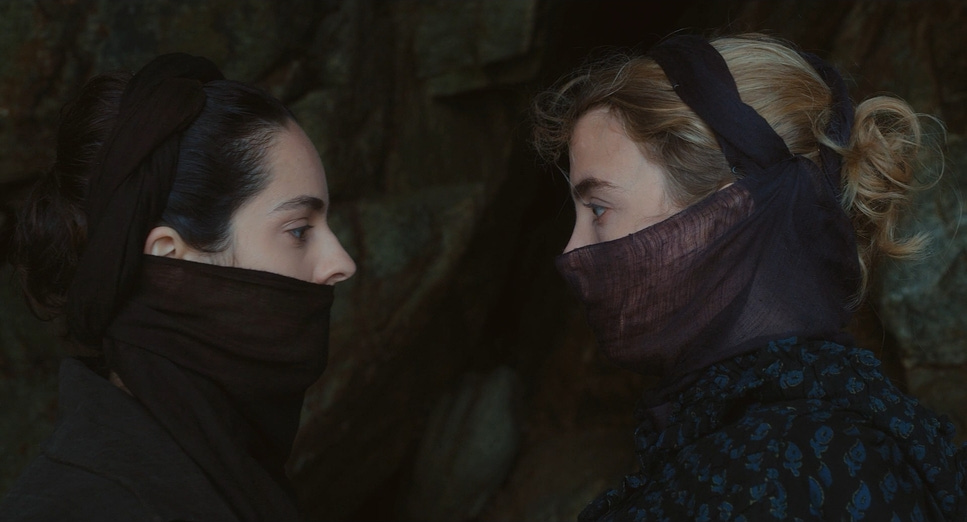
“She said it makes time longer.”
Héloïse tells Marianne before they apply to one another a mixture to make them “fly.” And herein lies the desire of not only the two lovers, but of Sciamma herself. To stretch out each scene before us as an infinite thread woven together by every intentional act of looking which temporarily grounds us, the audience and they, the lovers, in a symphony of presence.
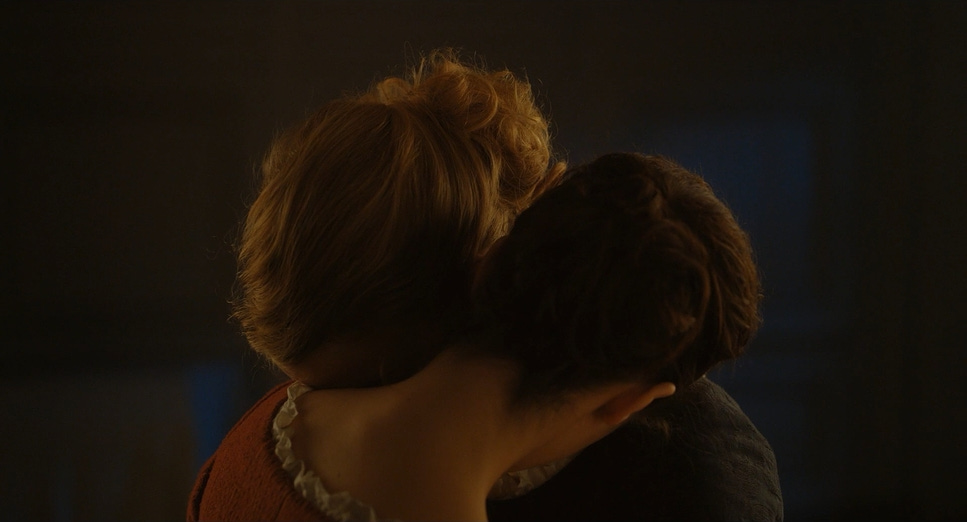
I believe that is a large part of what makes the movie so visceral and intoxicating; not just because of the cinematography that offers the richness of a Renaissance painting or the consistent crackling of fire reminding us of its attributes of warmth and destruction or the orchestral songs that lift us higher, but the way in which the film never seems to ask of us anything but to be present with these women as the women seek to be present with each other.
Even though the film naturally reaches its impending “doom,” as did Orpheus and Eurydice, the scenes themselves never act as a ticking clock or the feeling of timing running out except of course right before it does. But the moments outside of the last 24 hours they spend together feel every bit of the notion of “timeless.” As if they exist in some alternative reality where time truly isn’t a construct and in that way their relationship enters the realm of the eternal.
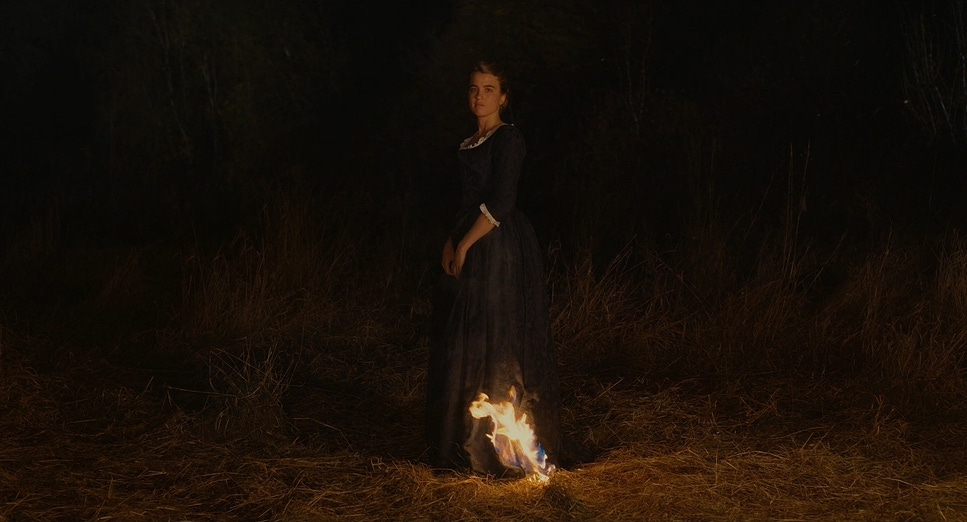
“In solitude, I felt the liberty you spoke of. But I also felt your absence”
The film ends on an orchestral swell as Marianne is forced back into the role of simply onlooker. Observing Héloïse’s life, or at least a moment of it, from an even greater distance than when they first met. As Eurydice was returned to the underworld by her lover’s glance and Orpheus is left with only her memory, the two women return to a world in which they may be looked at, but never truly seen.
Thank you for reading.
And if you enjoyed this kind of conversation, I’m actually set to have one next week with another cinephile and fellow Filmstacker where I’ve helped curate a list of Valentine’s Day picks for you.
And as both a cinephile and a bleeding heart romantic, I must say,
get ready for all the feelings…
Incredible. I love how Taylor-made this post feels, putting the community first.
If some of us ‘critics’ are the ink of Filmstack, then you’re 100% the heart. I love talking with you, and I really admire your generosity.
Thank you dude.