
August: Enter Third Space
Or How It's an Honor To Be "Stuck in the Middle with You."

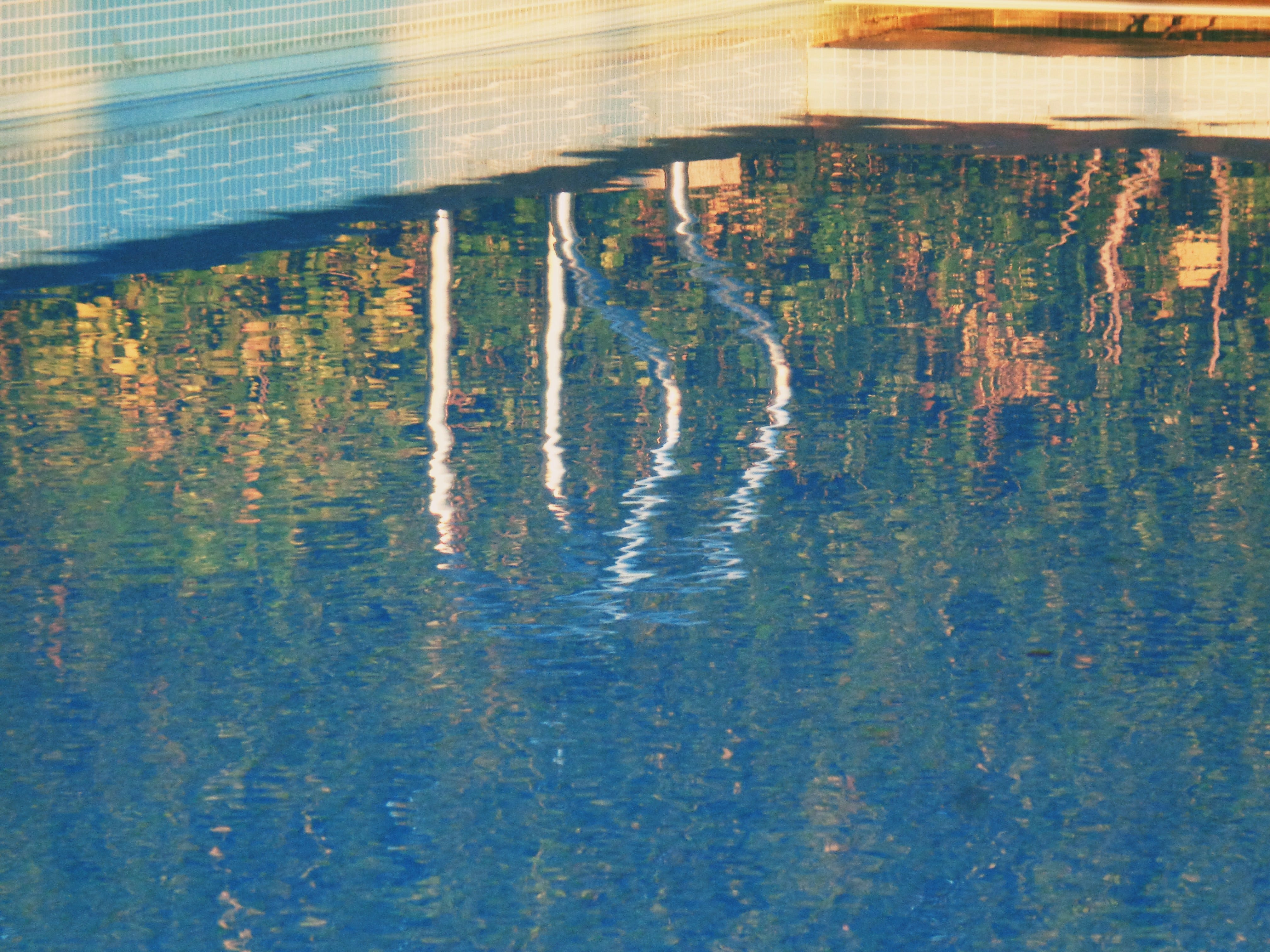
Here is an unspeakable secret: paradise is all around us and we do not understand. - Thomas Merton
Letter from the Editor:
I’m one of those people who, when hiking, will not stop until I get to the top or turning point of the hike because I am of the mindset:
I’ll catch the scenery on the way down after the “hard part” is over.
There are a lot of unanswered questions in my life right now.
A sort of suspension of what was and what has yet to unfold if you will.
A lot of uncertainty and weight as I’m sure there is in your life too, dear reader.
A lot of places “I thought I’d be by now” as cliche as that adage is.
In my last post, I talked about the difference between community and audience as if it wasn’t a revelation I was having in real time:
your audience uplifts the work.
your community uplifts you.
Now this may seem obvious to a lot of you, but to someone whose only real “community” was in the camraderic albeit chaotic - and let’s be real toxic - nature of being in your 20s in LA working catering gigs and restaurant jobs to get by -
this was news to me.
Not just the statement itself, but the understanding behind it as someone who has for over a year and a half been actively building a community - whether I truly grasped what that meant or not.
And from it was this deeper revelation and understanding:
An ecosystem built on the foundation of “community” is able to stabilize itself in storms. It’s able to pivot when the road becomes blocked. And at its core it lets you know that even though what you’re doing is risky and the road ahead unpaved — you are not building alone and that means you’re less likely to “quit” when things get too hard.
These past couple weeks I’ve been really feeling this essence of what a community is:
From Tom Violett recognizing that all the “light” people say I am, came from knowing darkness at its greatest depths:
To both Courtney Romano and Richard Rushfield recognizing that not all revolutions our out loud and in your face - in the beginning at least:
To Sam Widdoes calling me a “signal” when thinking about independent media finance:
Last Monday at 8:23 AM PT, the insatiable Taylor Lewis texted me asking if I was free on Thursday at 11. No details, but that’s kind of the fun thing about Taylor — she’s involved in so many things that no matter what she’s cooking up, it’s probably worth it. If you don’t believe me, take Richard Rushfield’s word for it.
She sent me an invite to a Zoom meeting titled “WORLDBUILDERS (Artist and Entrepreneur) Meeting” featuring fellow Substackers Maris Lidaka, Courtney Romano, and jake S. weisman, among others. The aptly named meeting was a revelation, a peek into an indie underworld of mighty dreamers, collaborators, and co-conspirators sharing imaginative models of distributed prosperity. Marketing plans, distribution networks, and production resource databases are being built right now, all with the stated goal of creating and supporting a sustained filmmaking middle class. It’s only a matter of time before these plans come into the light.
To Cameron Andrews straight up making me cry with his comments on the Modern Social Realism piece I spent months putting together:
I’ve spent the past week at home in Vermont, a place that always reminds me of who I am. I also haven’t been at work. It’s amazing how productive I can be when I’m not stressing about things that have nothing to do with my passions. Over the last few days I’ve finally been able to really dig into Taylor Lewis’s magazine on Modern Social Realism, and for the first time in a really, really long time, I feel excited. I feel like I have a prism through which I can start to investigate my own work and the work of others and the world around me.
(…)
Everybody working on the definition of Modern Social Realism seems to be very much thinking about the same things, and I could not be more excited to join that exploration in my own work. I’m not sure where it will take me, but I’m finally excited to engage with film again, and that’s enough.

I say this to say, I spend a lot time going “up the hill” to get to the turning point and sometimes I forget to enjoy the view.
So I just wanted to take a moment to say thank you, dear reader, for not only taking the time to read this, but for being a part of my community. It is something I do not take lightly and hope to never take for granted.
Is this getting a little too sentimental?
Let’s talk about Luz Films Mag.
This is officially the last “issue” of secret drop summer and oh what a summer it has been…
In May, we had Touch Grass: A Filmmaker’s Guide to Navigating the Times
MAY: TOUCH GRASS

**this magazine was made with care and layered engagement points (links). one can ‘flip through it’ idly as you would a typical magazine or if you’d like, sit with it awhile, and click on all the little gems found along the way. the choice is yours, dear reader. **this week’s edition is framed for filmmakers but can and should be applied to all artists.…
June was a double feature with WELCOME TO NEW WAVE BLACK NATURALISM ™ and The Future of Cinema is a Knicks/World Cup Watch Party (which was the prelude to this issue.)

Then July came and I unintentionally released a two hour read on Modern Social Realism and so I pulled back a bit in the next post and started with the simple question of What Is Cinema?
Which brings us to August and with it the first official newsletter of The Circuit.
THE CIRCUIT VOL. 1
In response to the Hollywood Strikes, about 2.5 years ago I wrote the following on a website I made called “prim magazine” where myself and my father were the only readers:
So Where Do We Go From Here?
The Short Answer? Bowling.
In Robert D. Putnam’s seminal book, Bowling Alone: The Collapse and Revival of American Community Putnam links the decline in civic engagement to the decline in America’s social capital and thus a decline in American society at large.
Putnam writes, “financial capital - the wherewithal for mass marketing - has steadily replaced social capital - that is, grassroots citizen networks - as the coin of the realm.”
Social capital refers to “the connections among individuals’ social networks and the norms of reciprocity and trustworthiness that arise from them.”
From Brett Reeder’s Summary of Bowling Alone
Putnam argues that civic life is collapsing - that Americans aren’t joining, as they once did, the groups and clubs that promote trust and cooperation. This undermines democracy. Stating, “community connectedness is not just about warm fuzzy tales of civic triumph. In measurable and well-documented ways, social capital makes an enormous difference in our lives...Social capital makes us smarter, healthier, safer, richer, and better able to govern a just and stable democracy.”
A society that relies on generalized reciprocity is more efficient than a distrustful society, for the same reason that money is more efficient than barter. Trust lubricates social life. Networks of civic engagement also facilitate coordination and communication and amplify information about the trustworthiness of other individuals.
But does it really matter that social capital is declining?
Putnam argues that, indeed, it does, as social capital “has many features that help people translate aspirations into realities.”
Putnam identifies five such features:
First, social capital makes collective problems easier to resolve, as there is less opposition between parties. This results in improved social environments.
Second, it makes business transactions easier, since when people trust each other… As a result, economic prosperity increases generally.
Third, social capital widens our awareness of our mutual connectivity. This can improve the quality of our civic and democratic institutions.
Fourth, it helps to increase and speed up the flow of information, which, in turn, improves education and economic production.
Finally, social capital improves our health and happiness through both psychological and biological processes which require human contact.
But what can we do to improve our social capital? According to Putnam, we should first learn from the past where “lessons can be found in a period uncannily like our own” The period he is referring to consists of roughly 1870-1915. During this time “dramatic technological, economic, and social change rendered obsolete a significant stock of social capital“...In response, the leaders of the day re-developed social capital with an “extraordinary burst of social inventiveness and political reform.”
The question is:
How do we build the kind of communities/cities/systems/nations/world that create social cohesion through civic engagement while building trust in otherwise polarized communities?
The short answer?
Watch Movies.
Independent, culturally rich, diverse, and world-expanding films. And I don’t just mean in a theater. I mean bring back the collective experience, connection, and conversation that cinema has provided to society for over a hundred years now.
This time of crisis is ripe with the opportunity to achieve what art achieves best and transcend the present moment to look towards a future where everyone involved in the art of producing a piece of cinema is given the proper environment to do so in a holistic and sustainable way. Like all art, true cinema simultaneously causes us to see the present more clearly and vividly dream the future. This world-building process is a collaborative effort that begins with the screenwriter and ends with the audience.
So how do we get back this crucial relationship between the artists (filmmakers) and audiences that has been lost to the abyss of streaming services, warring means for our attention, and the general calamity of our present world?
By Establishing A New Ecosystem Cultivating Such Relationships.
Now I’m not going to get too much into The Circuit’s plan right now -
jake S. weisman and I do have some exciting updates and partnerships to share with you soon - along with how it all is part of the “Worldbuilder’s Strategy” we’re running with a group of fellow artists and entrepreneurs that both Richard Rushfield and Sam Widdoes mentioned in their recent posts -
but for this particular “Volume,” I invited a few other artists and entrepreneurs or worldbuilders to share their thoughts on third spaces, microcinemas, and community.

First things first…let’s get this party started.
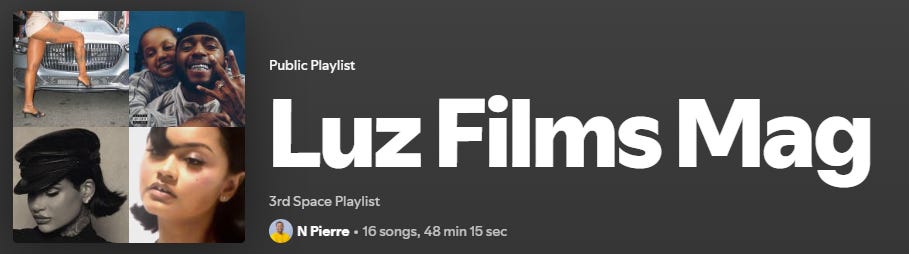
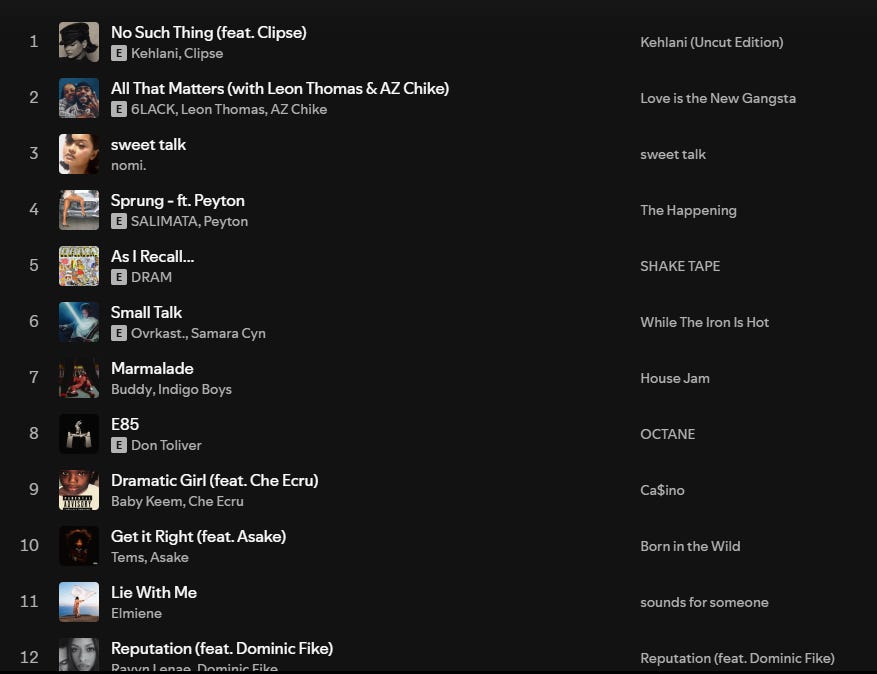
Nick Pierre blessed us with a “3rd Space Playlist” for this issue.
Spotify link here.
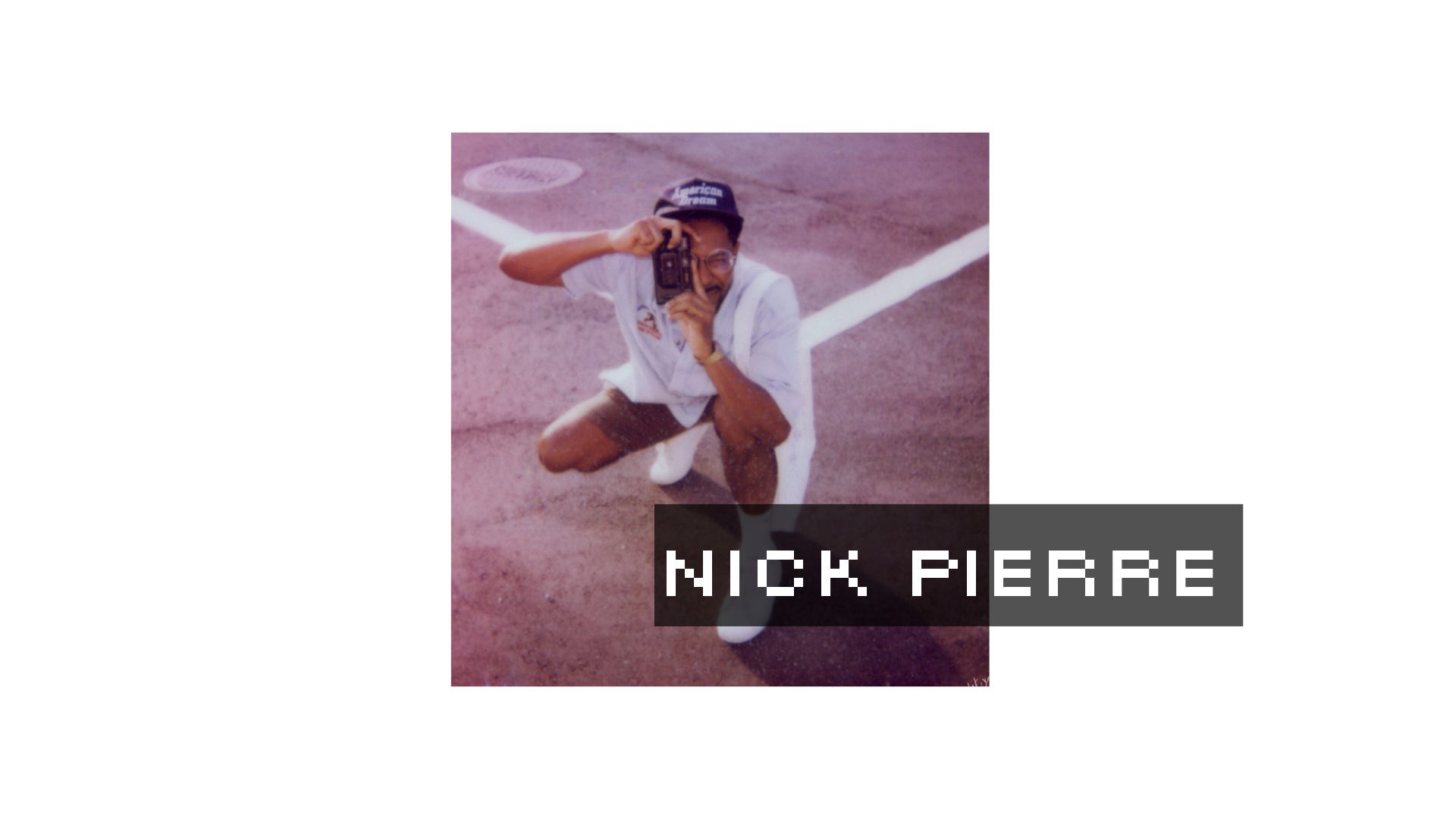
30-something Emmy-nominated rap nerd with a passion for storytelling.
Everyone is trying to work out what is happening to America right now. Why it seems to be unravelling. Why there’s so much rage and disconnect. Why there’s so much sorrow. The explanations are endless. There’s political polarization, social media, the pandemic, economic anxiety, and the fraying of institutions. All of these matter. But I wonder if we’re overlooking something more fundamental: We have nowhere left to be together.

Can microcinemas fill the gap left by the decline of third spaces? by James McLoughlin
What is a third space? Ray Oldenburg coined the term, meaning: a social surrounding separate from home and work or school. But it’s telling that you only ever heard of third spaces - or third places as they are sometimes referred to - in the context of their disappearance.
A quick rummage for articles on the topic prior to writing this returned:
- ‘Third places’: The ways losing our local haunts hurts us
- Where Did Everybody Go? The disappearance of third places in America
- Do Yourself a Favor and Go Find a ‘Third Place’
Nothing about the booming third spaces scene then. But if you’re reading this from Substack, which is highly likely, you’ll know that there are nascent movements around the world to bring people together more often.
Third spaces may be being taken away from us, but we have the ability to create them ourselves.
Further reading for this short piece led me to a Reddit thread on r/London, in which a user asks what people’s third places are. The pub comes up a lot. The library. Cafes. Cathedrals. Gyms (Third Space gym itself got a couple of mentions). Two things were notable about the answers in this thread:
1. Most commenters referenced places where they could be in a social setting but not obliged to socialise
2. Nobody said the cinema
1) isn’t so surprising to me as a Englishman. We’re not a particularly gregarious and outgoing people most of the time. 2) is more interesting for my purposes because for the last few months I’ve been part of a small community of filmmakers and film-lovers who have been meeting regularly in London.
It started out as having a few drinks together once a month. And we’ve now set up our own monthly microcinema. Each event has brought between 30-60 people together, who mostly don’t know each other, to watch a few short films and have a chat and a mix afterwards. It’s introduced me to a few new friends and it’s made me a more active part of my ‘community’ (that community being London).
Microcinemas can be a salve to the wounds left behind by the reduction of third spaces, a way to begin to stitch back up the tears in our social fabric. Low cost, social without pressure, and an injection of culture too.
I think most reading this will already be sold on that idea. The challenge for us is to break out of the habit of preaching to the choir. The lesson to be learnt from the Reddit thread, and from broader discussions about third spaces is that yes, people want them even if they don’t know they want them. But most don’t know about the variety available to them, or else are suffused with an inertia that repels them away from them.
We must be willing to do the work of selling - not in a commercial sense - the value of microcinemas to the broader community, beyond the film buffs that are driving the movement. That means work of promotion - submitting your events to listings websites, putting up posters, writing outside of the FIlmstack bubble - but it can also be as simple as inviting the people you know who know nothing about this type of thing. That’s where we start to make microcinemas a genuine third space option.
So in that spirit, I commend this speech to the house, and cordially invite any UK readers to our next MicroCinema event. Register here. See you there.
Microcinema (noun):A small, pop up cinema dedicated to offering intimate, Nondē screenings that encourage community engagement and celebrate creative freedom. Usually attended by a rag tag bunch of misfits who come together by the end to form a dysfunctional but loving family.
Building The Table
On being the change we want to see
Tyla Harrington
I’m working on my first narrative film this year. After years of playing with the idea (writing and giving my Notes App hell), I decided this Spring that this year would be the year. The zeitgeist is prime for filmmakers and storytellers this year. We are in a full on creative renaissance. Hollywood is getting lambasted daily for its treatment of creativity. I’ve read so many articles on “The Death of Hollywood”, “The Rise of the Indie Filmmaker” and “Funding Is Gone”. If I’m being honest with you, all of the discourse can be overwhelming for a newbie like myself, and the idea of pitching my work to strangers who potentially will look at my point of view and deem it unworthy. Oh my God, it’s scary.
BUT.
I had to ask myself a question. A question that determines the strategy for everything I want with any creative project moving forward: “What do I really want?”
Broad question I know. But, do I want my art to be consumed by millions of people looking to be entertained? OR do I want to curate and craft intentional audiences that will come and experience the art because they want to expand their perspectives? There’s different worlds here. And that is a relief to know, because for so long, we’ve been taught that there’s only one way for credible viability as a filmmaker. It’s entirely dependent upon a whole machine’s alignment with your work. Put a pin in this.
On a personal note, I’m a mother. I’ve been a wife and mother and a single mother. Money has not been abundant at times, and sometimes we struggled with finding things to just do. It is exhausting to have a desire to experience outside when everywhere you turn, you have to spend money to enjoy things. I know, I know. Parks, museums on free days, libraries, malls. Yes, and. The variety of activities shrink significantly when you don’t have money. The lack of third spaces has been a sore spot for me since I became a mother at 17. Missing the benefits of true third spaces took away from my ability to meet new friends, to have somewhere for my children to play and make friends, all of it. In the 2010’s, all of us were chronically online and ignoring each other. At least where I was at.
I’m not a bean souper. I don’t feel entitled to spaces or groups. However, the lack of these elements of life, that were once the norm in previous decades, left a void in me. By the time I started exploring my own creativity, I became adamant about creating experiences for everyone that didn’t have to cost a significant amount of money. I was going to be the change I wanted to see. Don’t laugh at me. I started a band. I sang and directed and composed and hosted and organized and marketed. All by myself. I paid venue fees up front and didn’t worry about the overhead. I invited other musicians to come play. Whatever they wanted. It wasn’t a concert, it was a jam. I didn’t trip about making the money back, because I believe that if you want to make money, there are separate strategies for that. Not everything has to be about money.
I was healing the young mother who wanted to come outside, but maybe didn’t have extra money for a two drink minimum on top of parking and entry fees. For the musician who wanted to practice, be heard, feel connected without the clout yet. Needless to say, the jams were a huge success. I got into the fine art scene and replicated this model. And then the party scene–Boiler Room-esque in its DNA–with selectors/DJ’s just wanting to create a good vibe and attendees wanting to throw their cares into the wind for just one night. I highlighted artists of color and queer artists and women artists first. And kept the same energy. Free. And when it couldn’t be free for attendees, it was to put money in the pockets of the artists who shared their gifts so freely. I would film and photograph each of these events and give to each participant, with my blessing, visual assets to use to promote whatever they wanted to do next. I am proud to say I helped some artists begin careers and develop followings. I’m not saying all of this to be lauded or to brag. I’m saying it because this framework that I created is replicable and I truly believe that in order to make change, we have to initiate it ourselves rather than waiting on greedy corporations to grow a heart.
So remember that pin about filmmaking? Yeah. I grew into a filmmaker from all of the capturing I did for these events I created and curated over the years. I will admit that propping up my own art and promoting it is a sore spot for me for a myriad of reasons. I have accepted that rejection is a part of the journey of getting your film in front of people. Rejection from pitches and from festival submissions and you know what? I’m game. However, I do want a built-in win. Selfishly. Righteously. I’m grateful to have stumbled across Coffeehouse Cinema on Substack who inspired me to do the very thing that I had been mulling over in my mind for years now, and I decided to use the same framework that I used with art, music and parties.
Micro Cinema.
I’m creating a micro cinema pop up experience here in Orlando, Florida in December. Not the first of its kind, but certainly unique and unapologetic. I’m going to screen my first official narrative short, platform other filmmakers from underprivileged backgrounds, have a coffee pop-up and it will be completely free. The door is wide open for us as creatives. The gates that the keepers once had exclusive keys to have been kicked wide open with social media, lower priced pro-sumer tools and our sheer exhaustion of the bullshit. Creatives deserve to be able to share their work in front of willing and open-minded audiences. Humans deserve to be entertained without having their pockets run through every time. Community deserves to thrive without the barrier of money and space. And maybe, just maybe, a young mother who is creative can see herself in these spaces, in this art and be inspired to continue being the change that she wants to see.
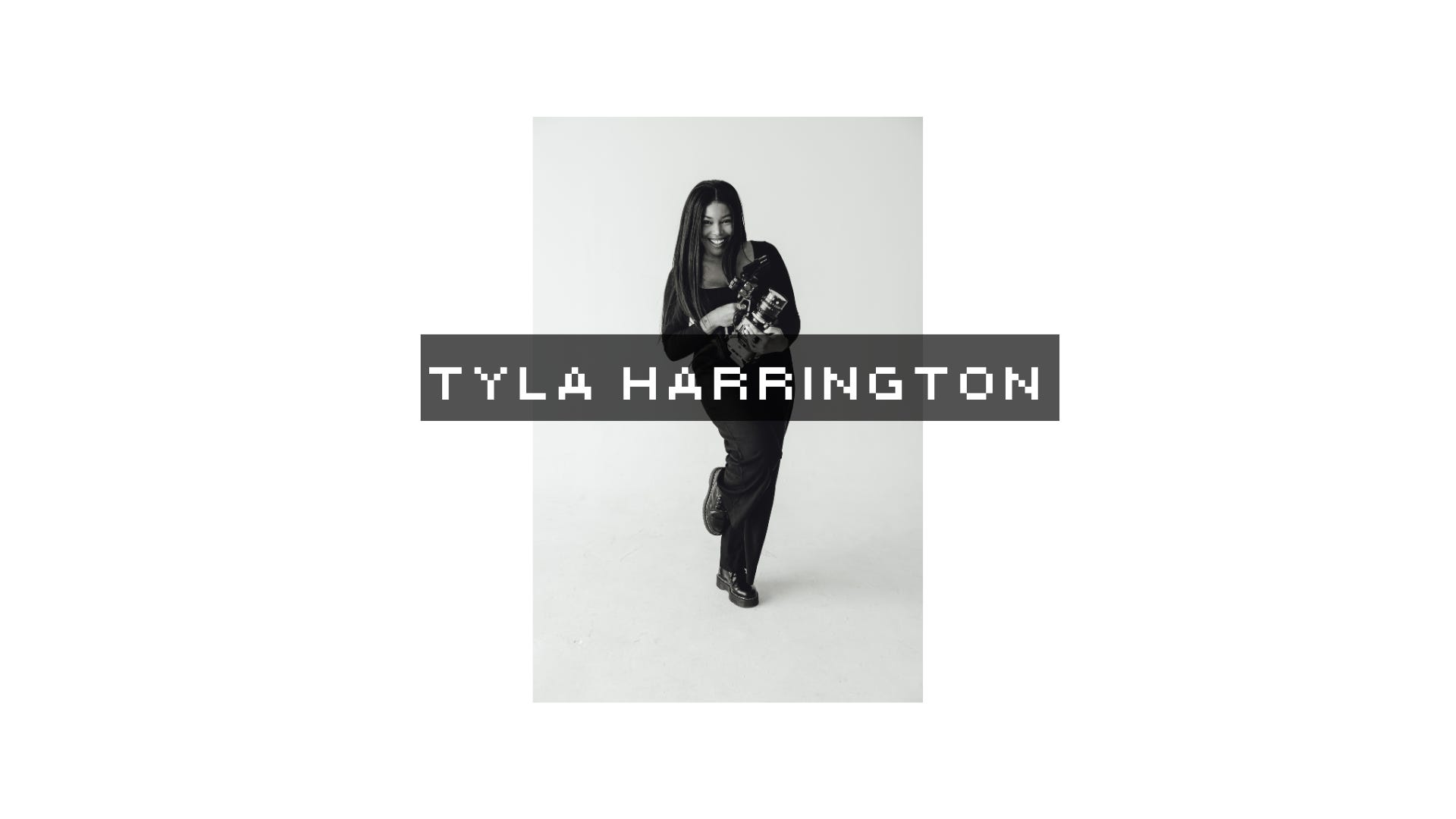
Tyla Harrington is a photographer, filmmaker, and writer from Orlando, Florida. She founded Obscura, a video production company built on visual storytelling for brands, and Black Surrealism, a platform for Black American surrealist narrative in film and prose. Her debut short film Blue — a Southern Gothic fairytale retelling — is currently in pre-production.
Link to video for my last party I threw:
ya’ll remember the romance of watching movies in public spaces don’t you?
Well my friend John Noire is here to remind you…
A Cinematic Romance
John Noire
Romantic Projections, John Noire
“I’ve fallen in love…I didn’t think such violent things could happen to ordinary people.” – Brief Encounter (1945)
It’s 11:30pm. You’ve just been on a double date for the past five hours and you don’t want the night to end. But you can’t call it a date, at least not yet. All because you told a mutual friend that you wanted to lower the stakes, so they named it a ‘get together’ instead.
As everybody is saying their goodbyes, you rack your brain to think of a place that will still be open at this hour, a shared space for you to get more intimate with your potential partner.
That’s when an idea pops into your head: the cinema. You go through some listings on your phone and find that there’s a midnight showing of the latest entry in the indie horror movie craze: Obsession. Even though you’re not a fan of the genre, you promptly pay the price of admission.
That’s when you ask her, surprised at how quickly she comes back with an answer. The two of you catch a cab and, on the way there, you get to know each other better, the night getting cold enough to make you regret not bringing along a sweater.
You arrive at the cinema fifteen minutes late. Usually, you would care but all you can focus on is getting a couple of concessions for your date.
The film starts playing and it reminds you of those tropes you saw in those late 2000s romantic comedies: boy likes girl, boy is unsure if girl likes him back.
As the movie progresses, you see the predatory consequences of the protagonist’s platonic obsession, watching his ‘love interest’ take the manic pixie dream girl trope to its nightmarish conclusion.
You watch all this while your date unsuccessfully tries to cover her eyes, noticing one hand being a stretch away from her thighs.
You look at it, wondering whether this is a gesture for a deeper connection or a reflex of pure convenience. You gently place her hand in yours, stunned to silence at the film’s closing sequence.
You walk your date to her Uber and can feel the two of you getting a little bit closer, both of your guards coming down while doing your best to maintain your composure.
You talk with her about how crazy the film was and its similarities to movies like Blink Twice and Get Out, grateful that you found an original film that upends the current creative drought.
That’s when you notice it: the smirk on her face, a reflection of her playful skepticism at the recent events that just took place.
Despite your best efforts, you’re unable to convince her that watching a scary movie wasn’t a pre-planned part of your ‘game’, subconsciously thinking it might be some old advice from your uncle that might be partly to blame.
You push those thoughts out of your head and comment on the sweet scent from her flowery perfume, cherishing the ways her eyes light up, fantasizing about the possibility of a new relationship starting to bloom.
You open the door to her car, warmly waving goodbye, wrapped up in the thrills of a terrifying and terrific night.
Restoring the feeling in storytelling

The Legends Themselves
Ellis J. Sutton:
Ellis Sutton is a producer, writer, and director, and the co-founder of Coffeehouse Cinema. He has worked across film, television, and live events with the NAACP Image Awards, Netflix, Warner Bros. Pictures, and Hartbeat, supporting projects from development through production. In addition to his filmmaking work, he writes on Substack through Notes from the Studio, exploring storytelling, industry trends, and creative strategy. At Coffeehouse Cinema, he brings that experience together to build a community-centered space for short films, emerging voices, and intentional moviegoing.
Eddie Locks:
Eddie Locks is an independent producer and the programming lead of Coffeehouse Cinema. He has worked across physical production at Warner Bros. Pictures and creative development at Khalabo Ink Society, Kenya Barris’ production company, supporting projects from early development through production. Alongside his work at Coffeehouse Cinema, he is developing multiple independent film and television projects, bringing a strong curatorial eye and a filmmaker-first perspective to the CHC programming experience.
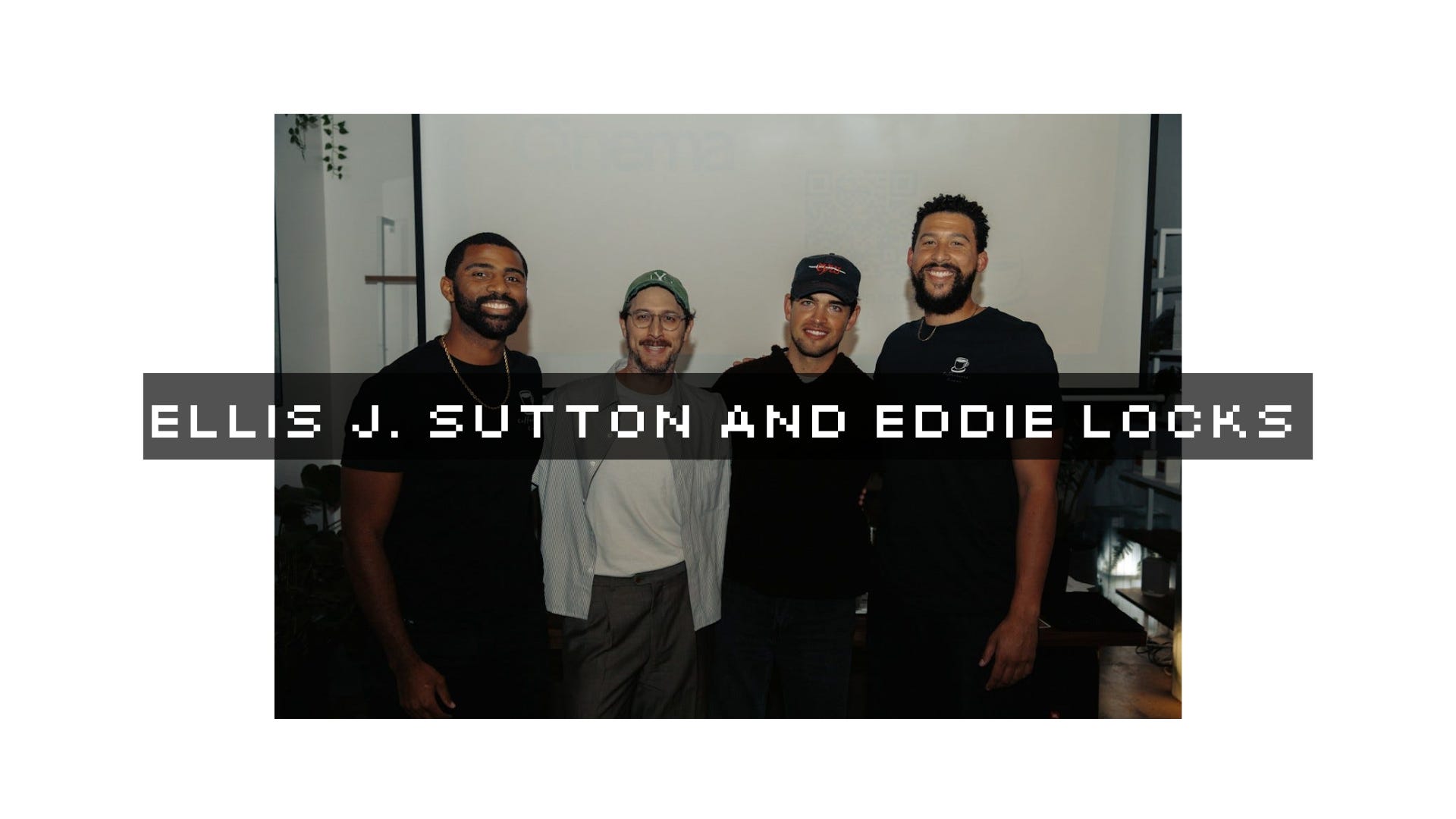
Top 2 Audience Picks So Far:
Because in an era where audiences are overwhelmed with options, filmmakers are no longer just competing on the quality of the work itself. They’re competing on connection, perspective, identity, and trust. - Ellis J. Sutton

INTRODUCING LUZ FILMS MAG FIRST FIELD REPORTER: Decarceration
**my only note to D when I asked him if he’d cover the event was to “have fun with it.”
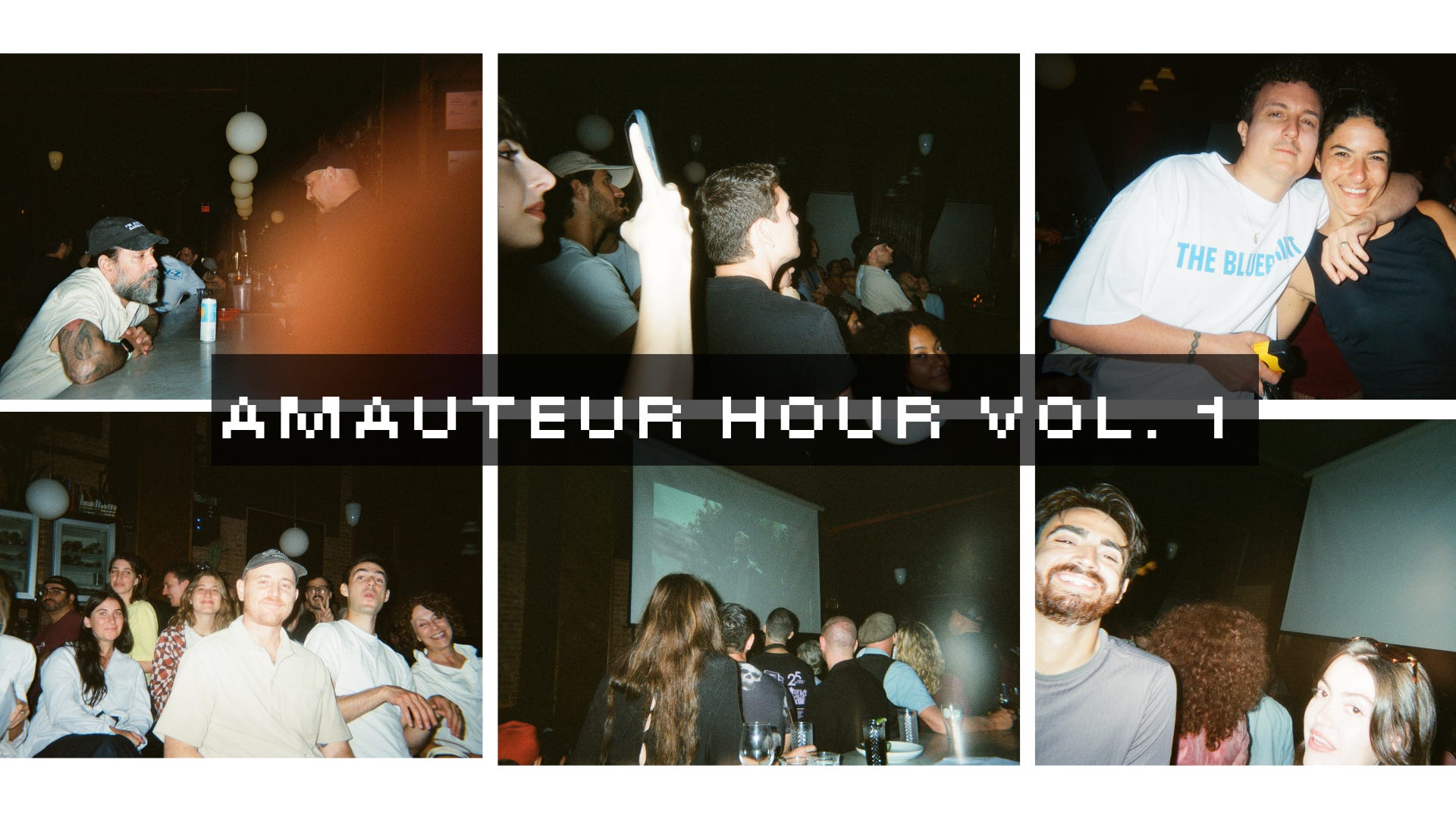
I was privileged to be a guest at AMAUTEUR HOUR VOL. 1 this July 20 courtesy of filmmaker Adam Kritzer. I knew the evening would be a success so I nestled in at the bar early and defended my space from a wild and rowdy crowd enthusiastic about the indie film scene in New York. Kritzer was a generous host, and he was able to screen a few surprises we still cannot discuss. Kritzer provided musical accompaniment at one point, a vicious call-and-response about being Stephen Miller’s mother. Not mean enough for my tastes, but what is? I have been told this is also the opening number for Mr. Kritzer’s upcoming film “Lost Cause”.
Sarah Metai Benjamin was present to screen her short film “Meow” – I wrote about that here previously, and it was just as wonderful seeing it a second time. Carlos Vallardes had a unique surprise, a staged re-enactment of an interview with Mary Harron regarding the nineties classic “I Shot Andy Warhol”, with Harron and Valerie Solanas brought to life by the effervescent multi-hyphenate filmmakers Delilah Napier and Lucy Powers. Josephine Decker sadly could not make it, though her deranged and explicit short film “A Stable Marriage” screened to shocked laughter, a mixture of screwball comedy and confrontational comedy. I do hope there will be more of these, and I will personally kidnap and torture Mr. Kritzer if there are not.
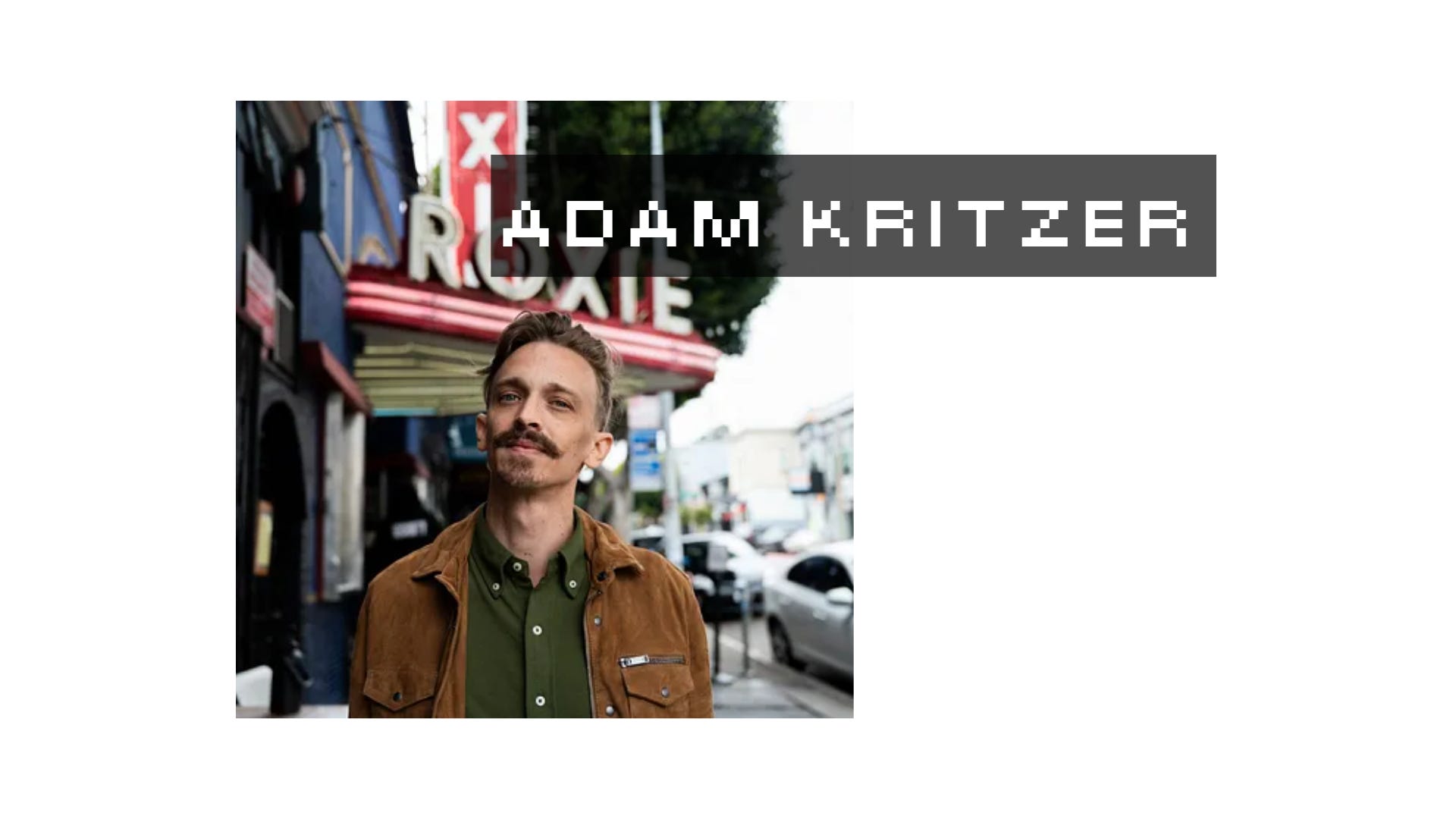
Adam Kritzer is an artist, distributor, curator, and educator. His second feature film, Lost Cause, is currently on the festival circuit and coming to theaters in 2027. He is the founder and director of AMAUTEUR, a label that makes, releases, exhibits and writes about movies and music. He also is the founder and director of the Art Detectives, an art school that develops and implements personalized art and arts integration curricula for student-artists of all ages and abilities. He lives in New York City with his partner-in-crime and their schnauzer, Upton Sinclair.
MJT:
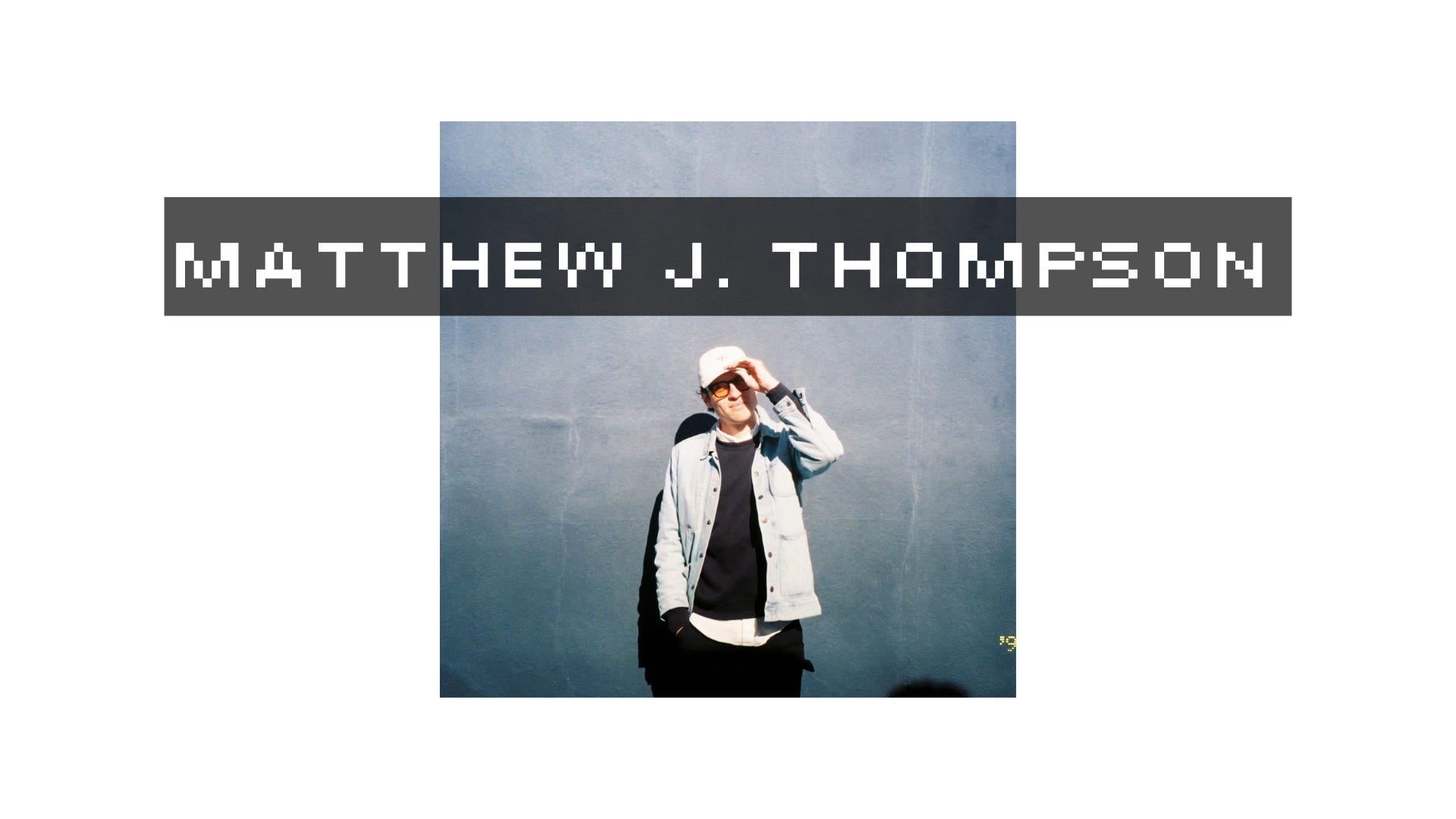
Matthew James Thompson (MJT) is a filmmaker living in New York City. He got his start at 13, making skateboarding videos with his friends. Years later, he graduated to Editing at Advertising Agencies before shifting his focus and skillset to narrative film.
His narrative film work has won awards at international film festivals; including a “Directorial Discovery Award” at the Oscar-Qualifying Rhode Island Film Festival, “Best of the Fest” at the HP Lovecraft festival in LA, a special invitation to the London Liftoff Film Festival in the UK, and two Vimeo Staff Picks.
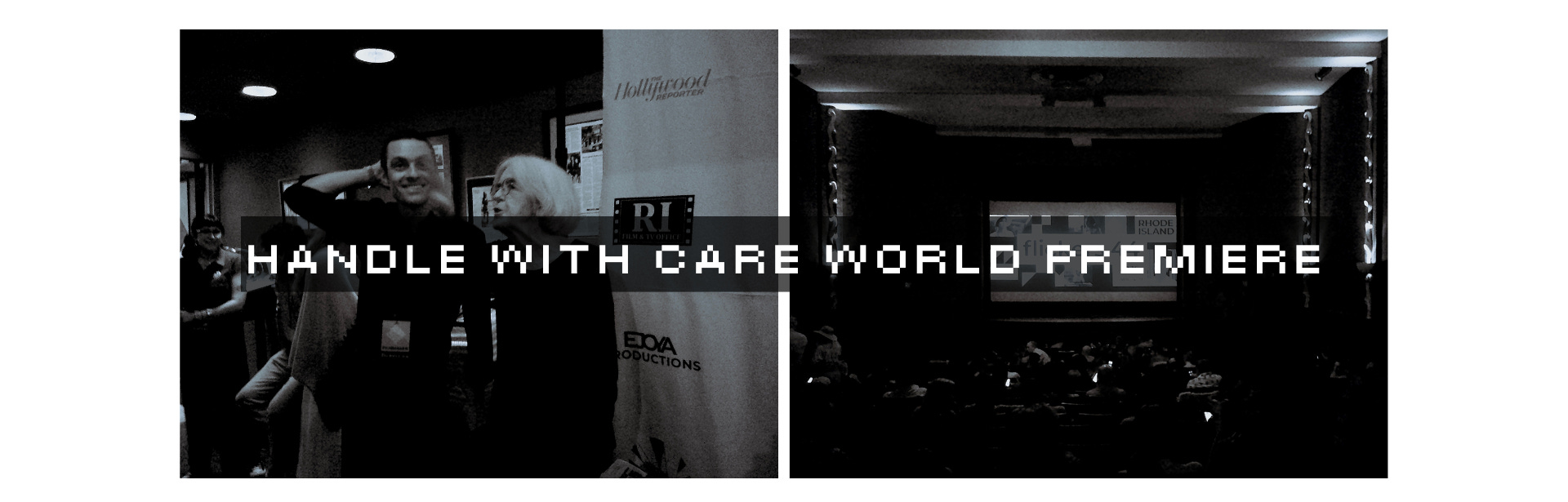
Matthew has written four feature films which are currently at various stages of development. In late 2025, he completed his first feature Handle With Care which premiered at the 2026 Rhode Island Film Festival and won Grand Prizes Best Feature Film and Best Actor.
And for those who don’t know Matthew is the King of (audience) care:

Heaven is a Watch Party by Alex Lewis
**originally published in the Luz Films Mag issue here.
I’ve long known Madison Square Garden to be a magical place.
For five years, until Michael Jordan became majority owner of the Charlotte Hornets (then Bobcats), the basketball legend hosted his high school all star game, the Jordan Brand Classic, at MSG. During one of its final years at the hailed arena, my dad took me to the game on a whim. A huge basketball nerd, I jumped at the chance to see names I’d read in Slam Magazine like Russell Westbrook, Kevin Love, and Brandon Jennings.
As if the miracles aimed to one-up each other, my uncle somehow spotted us from across the venue and floated a possible opportunity to meet His Airness, the one and only MJ. It felt like an impossibility — a pipe dream! — until my uncle pulled us from our seats at halftime, while Wale performed “Nike Boots” at center court no less, and led us to a private elevator.
As the doors opened, we were met with a long-limbed, baby-faced passenger who couldn’t be anyone but Kevin Durant. A couple nights earlier, the soon-to-be Rookie of the Year had closed out his first NBA season on a win against the Golden State Warriors and a then-career-high 42 points. My dad and uncle made small talk with the 19-year-old until we reached our floor.
Moments later, we walked into a dimly lit room full of people and, before I could fully process that MJ was lounging on a couch toward the back, I spotted Vince Carter and Rudy Gay. The basketball nerd in me could hardly contain himself. I got their autographs while my cousin, who was named after MJ, devised his plan to meet Black Jesus.
My nerves got the best of me and I stayed back while Jordan took my program for MJ to autograph. He got up soon after and met my hand as he exited the room. Another miracle as I finally touched the hem of his robe.
So yes, I’ve long understood MSG as a magical place—and the miracles continued in Game 4 of the 2026 NBA Finals as the New York Knicks fought their way back from a 29-point deficit to beat the San Antonio Spurs on a last-second tip-in from OG Anunoby.
On a night where Taylor Swift, donning a blue and orange Stevie “Knicks” t-shirt, hugged and twirled around Law and Order: SVU’s Mariska Hargitay, it’s easy to believe MSG was the center of the world. But I’d argue it wasn’t even the center of New York.
I know this because folks gathered in bars and around projector screens all around the city, joining together for a chance to witness their team inch one step closer to something they haven’t done in 53 years: win an NBA championship.
The next day, remote coworkers were asked about the atmosphere in the city. We’d all seen the videos on Instagram of watch parties exploding with joy and street poets finding new ways to proclaim their championship predictions—the overwhelming belief that the Knicks would wrap this up in five games.
By the time you’re reading this, the Knicks have probably secured the title and guaranteed Zohran Mamdani another four years as mayor. Spike Lee has likely been paraded around the city, and Donald Trump is taking credit for bringing a championship to New York.
While I joke, it’s not funny how everyday working class people have been priced out of cultural phenomena or forced to relinquish their life savings to witness these events up close. Ahead of Game 3, a SeatGeek spokesperson boasted that tickets for the first matchup at MSG were averaging $7,768 per person. Forbes noted that the cost was expected to rise as the series extended past four games.
This barrier to access is just as prevalent in many of our local communities. There’s often a price tag for leaving the house, and even within our homes, there’s a paywall to watch many of the things we want to watch or read the publications we want to read. We’ve been pushed into isolation due to economic hardships and other forms of state-sanctioned violence; however, this hasn’t kept us down. I’ve seen many of us carve out our own spaces as a result.
Recently, I finessed a local publication in my hometown of Columbus, Ohio into letting me cover some of these people making clubs around the things they love while removing cost as a hindrance to finding community. One of my homies, Nykeia, started Queer Craft Society as a way to nurture her own artistic discipline and, along the way, ended up finding that other LGBTQIA+ folks wanted to create a weekly habit of making art.
Another friend, Rebecca, started Zine Club Columbus because she was new to Ohio and wanted to meet likeminded people. All these groups meet for free, and in every instance I learned about, these gatherings gave the organizers and attendees an opportunity to connect with others and gain a deeper love for their art and the city where they make it.
I relate with this sentiment because a cornerstone of my creative practice since graduating college has been making spaces for people to create and be encouraged in their creativity. I moved to Colorado Springs less than a week after graduation and started Car Window Poetry a few months later.
What started as a local art project, focused on leaving poems under people’s windshield wipers, became a global poetry movement with writers sharing poems around the world. The cards are downloadable for free and can be shared however you please. I got to make friends around the city as they became witnesses of this work, which of course, made it harder to leave, but it showed me what was possible in my new home of Columbus.
Since I moved here eight years ago, relocating to be closer to my then-girlfriend, now-wife, I’ve found people and learned what it means to love a city for its potential instead of its current ideals.
I see how the magic is made and where it’s conjured. It doesn’t happen in statehouses and boardrooms. The magicians aren’t celebrities, politicians, or CEOs. They’re folks who, despite their anxieties, dare to step into rooms like The Album Club or Shut Up & Write and broaden their horizons. I think of Clintonville’s Studio 35, the indie movie theater where I gathered for free with other Bravoholics to watch part three of the highly anticipated Summer House reunion.
Whether it’s cinema or the arts in our local communities, the power usually doesn’t lie in what we see or what makes it in the headlines. The magic is in the unseen. The third spaces where people claw toward each other in a frenzy of sorts, desperate to be with others who share their beloveds.
Ross Gay said, “Gathering around what we love might, in fact, be the process by which we imagine the lives that we want.” Said another way, also by Gay, “Noticing what we love in common, and studying that, might help us survive.”
I can’t recall who posted it, but I remember seeing someone online discuss how Spurs fans will be okay no matter the outcome. New Yorkers, however, psychologically need this championship. Not just for the team, but for themselves.
Now, they’ve seen what love can look like. On the altars of abuelas and West Indian grandmothers, and in the arms of new friends who were strangers before they sweated through 48 minutes of basketball together.
Many of them found allegiance outside the heavily surveillanced corridors of MSG with its Celebrity Row and four-figure seats. Instead, they casted spells around static-laden TVs behind bodega counters and brushing shoulders as celebrations flowed into the streets, knowing miracles most often come from the touching of each other’s robes.
Our very survival its own kind of magic.

+ go see Cameron Andrews “Missing Pieces” this Saturday (August 15th)
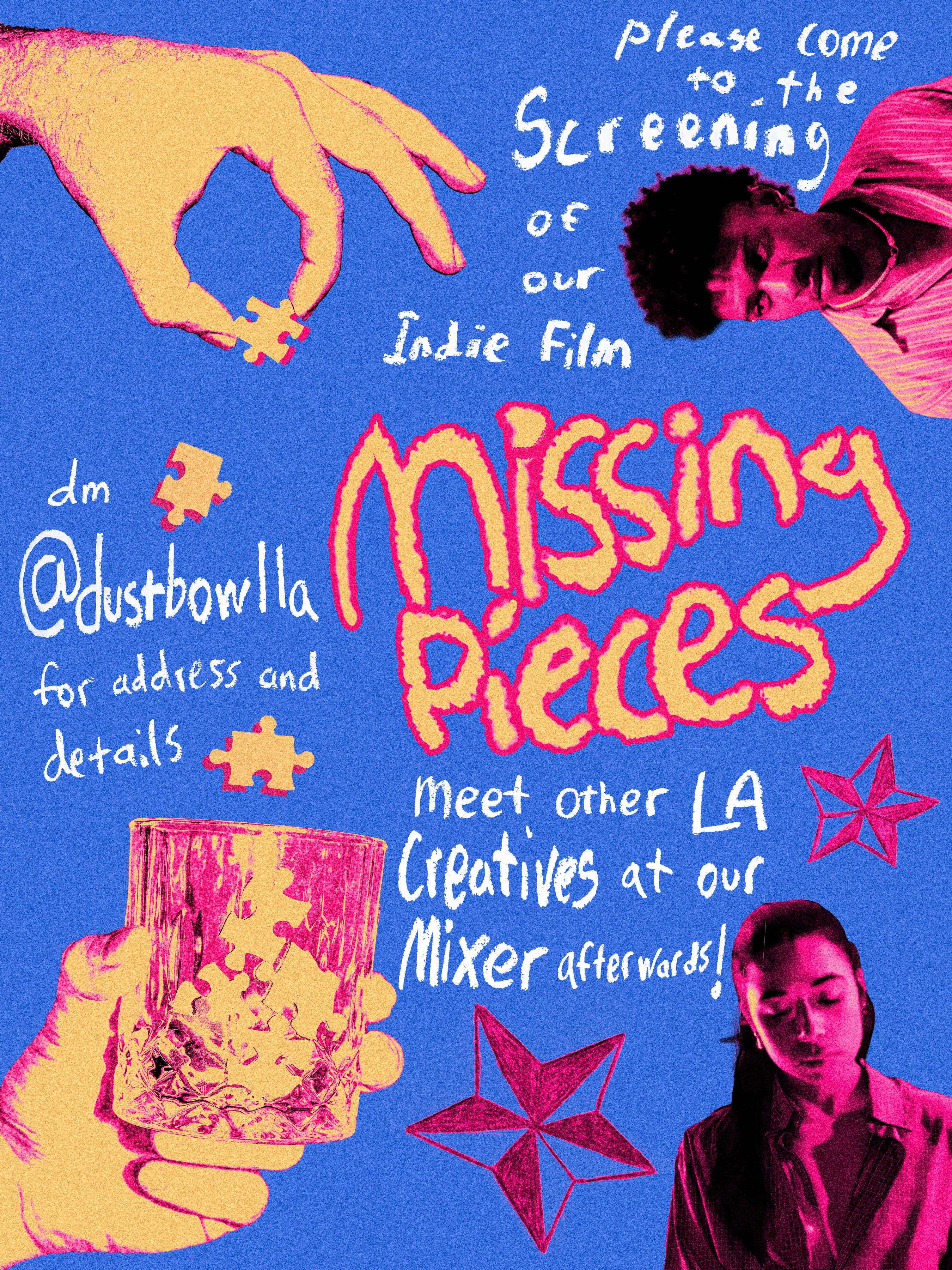
From Cameron:
My friends and I are screening my film Missing Pieces this upcoming Saturday near DTLA. We’re opening the space at 7 for general hanging and will be screening the film around 8:30 once it’s dark. Rather than a Q&A or anything after we’ll be hanging around for a while to talk about the movie and what you thought and anything else we all wanna talk about. I really hope to see you there, this project was a true labor of love and your support would mean the world."
+ watch Mel Zog’s video essays:
Imagining the End of Loneliness: Horror & the Collective Body

+ more FilmStackers doing other Filmstackers’ Q&A’s please:
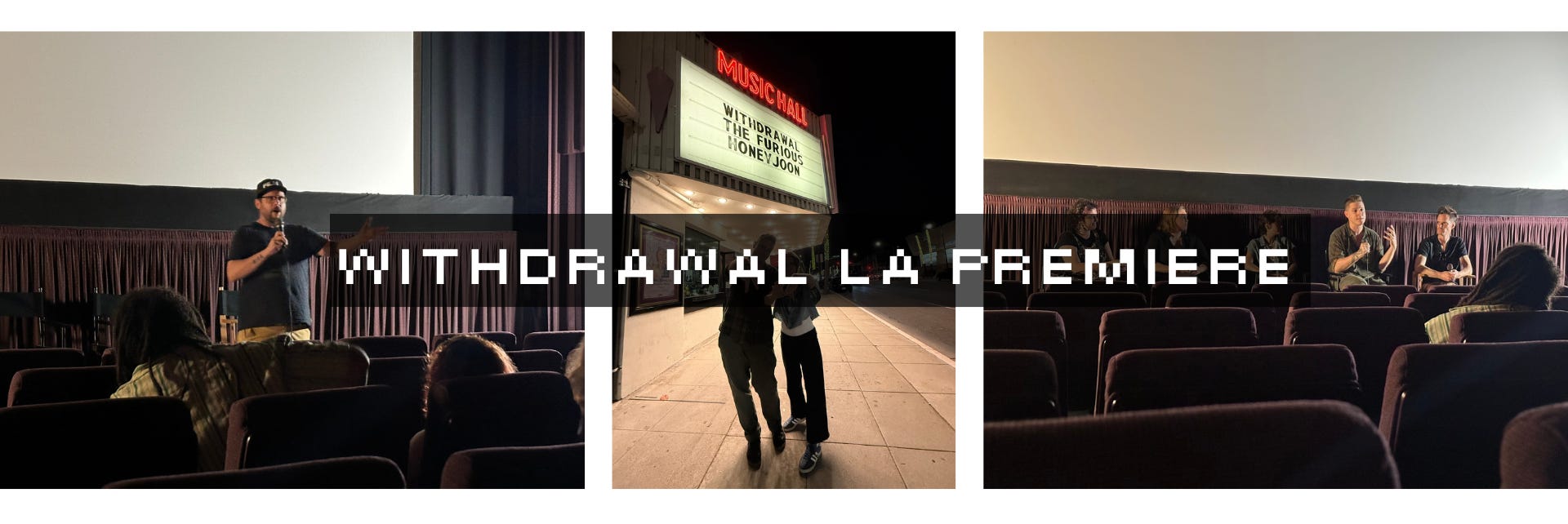
jake S. weisman and Aaron Strand in LA:
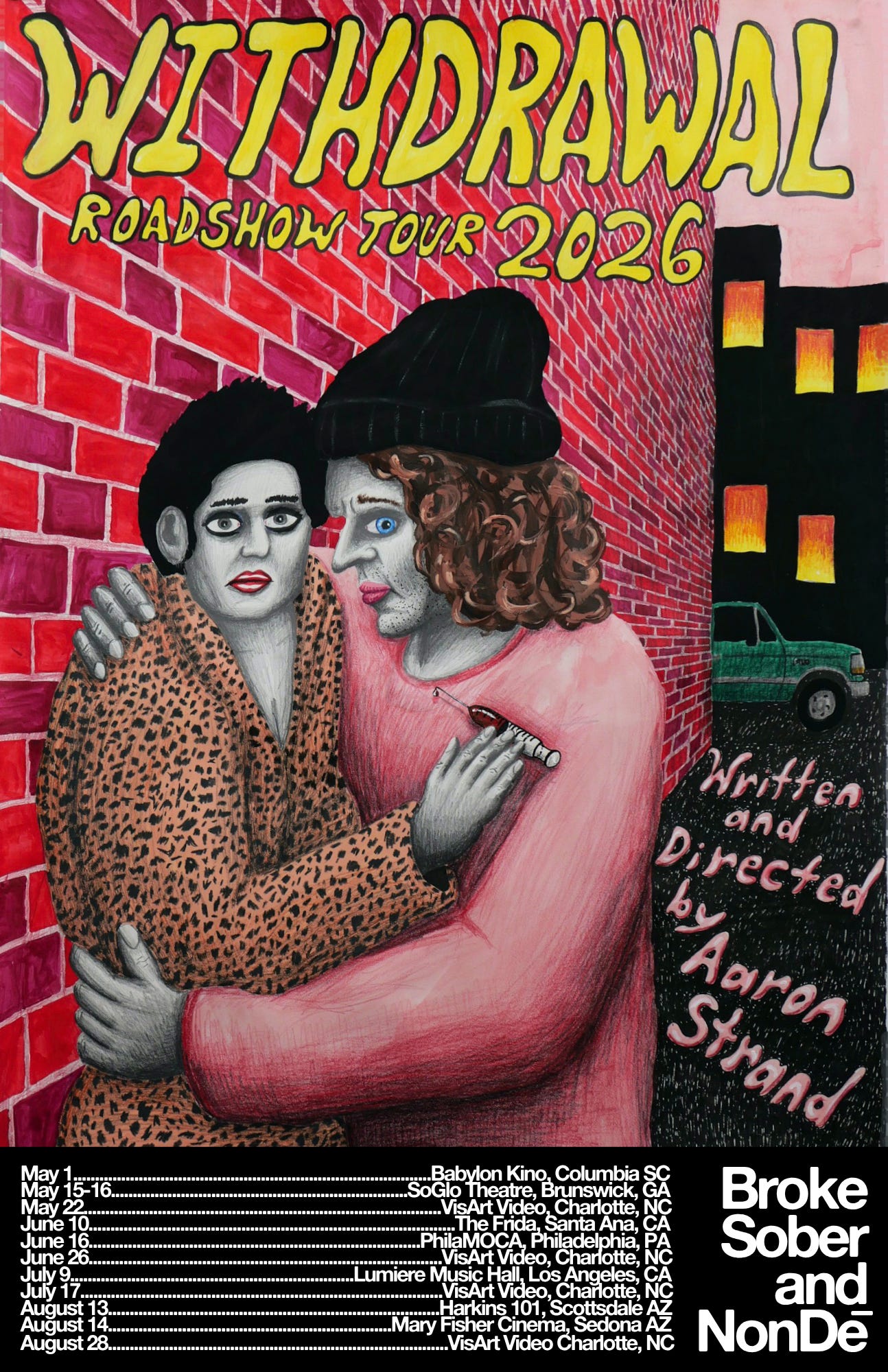
and if you haven’t been following along and supporting Aaron Strand’s North American Tour well… you really should be:
+ REIMAGINING THE DIGITAL THIRD SPACE WITH A LITTLE HELP FROM MY FRIENDS:
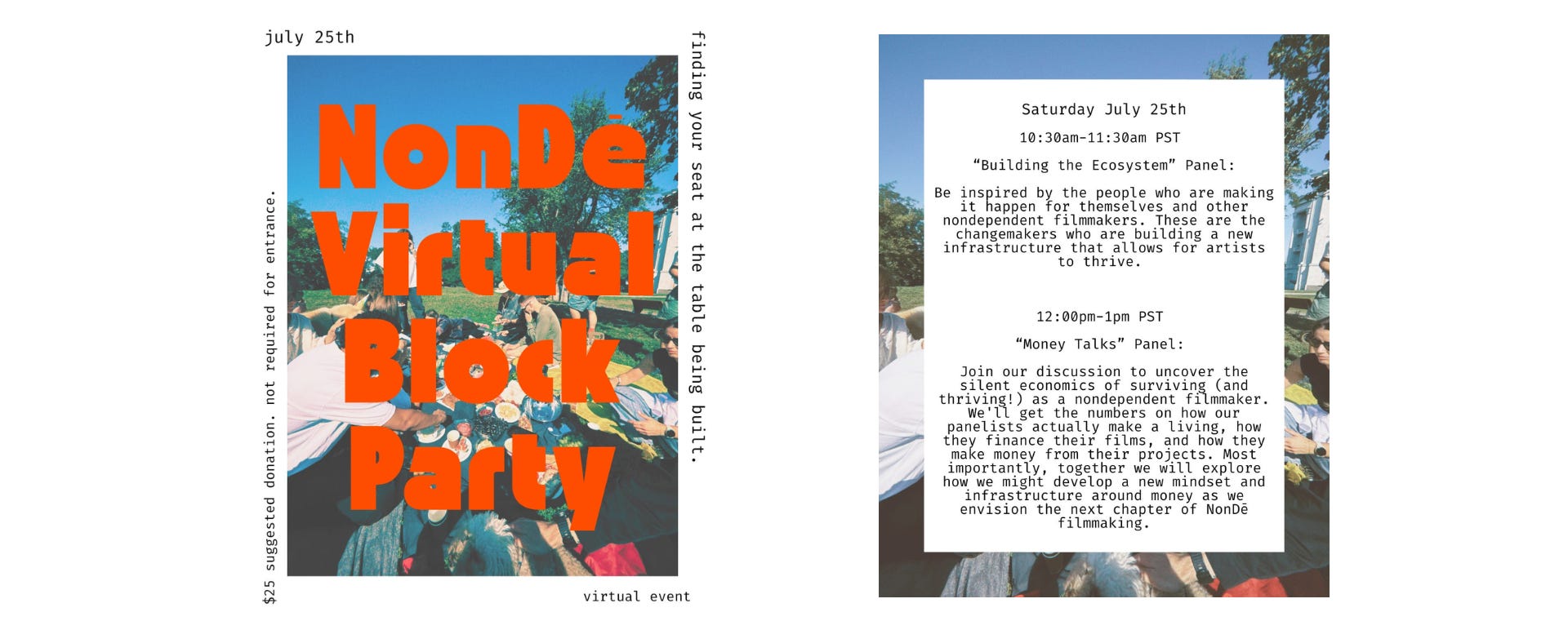
Are we taking on a giant system in one of the most volatile times? Yes.
Is building an entirely new ecosystem for the hardest art form a fool’s errand? Possibly yes.
Is it the most amazing and fun activity a filmmaker can do at this moment? Hell yes!
Because if we want to welcome people into this movement. It has to be a party.
We had no idea what to expect. But what we received was everything and more of what we hoped for:
The Big Surprise
Something that we realized between our two panels is this:
Non-Dependence is already happening.
Two of our panelists (Amy Janes and Kristi Ray) have already built their own ecosystems in their localities. Kristi Ray has built not only a successful production company in Wilmington, North Carolina. But also lobbied the state government to create tax incentives for low-budget filmmakers. Amy Janes has built a studio and training facility in Oklahoma that has become the go-to place for local talent and stories. All of our panelists are already doing the damn thing that we write about. And most importantly - we are all now in community with each other.
🤝🫶🥰 wow Taylor this is amazing, honored to be included!
Amazing stuff holy shit. I've got so much to learn. Thank you Taylor for this ^^